

Meta vs Google vs LinkedIn Ads: How to Choose an Ad Platform (2026)
Updated: October 29, 2026 · 3 min read
Deciding where your ad budget goes matters as much as the ad itself. Meta, Google and LinkedIn all work, and each does a different job. Meta reaches people before they search, Google catches the person searching right now, and LinkedIn finds the decision maker inside a company. Here we put the three side by side and show, step by step, where to start.
Meta Ads: creates demand
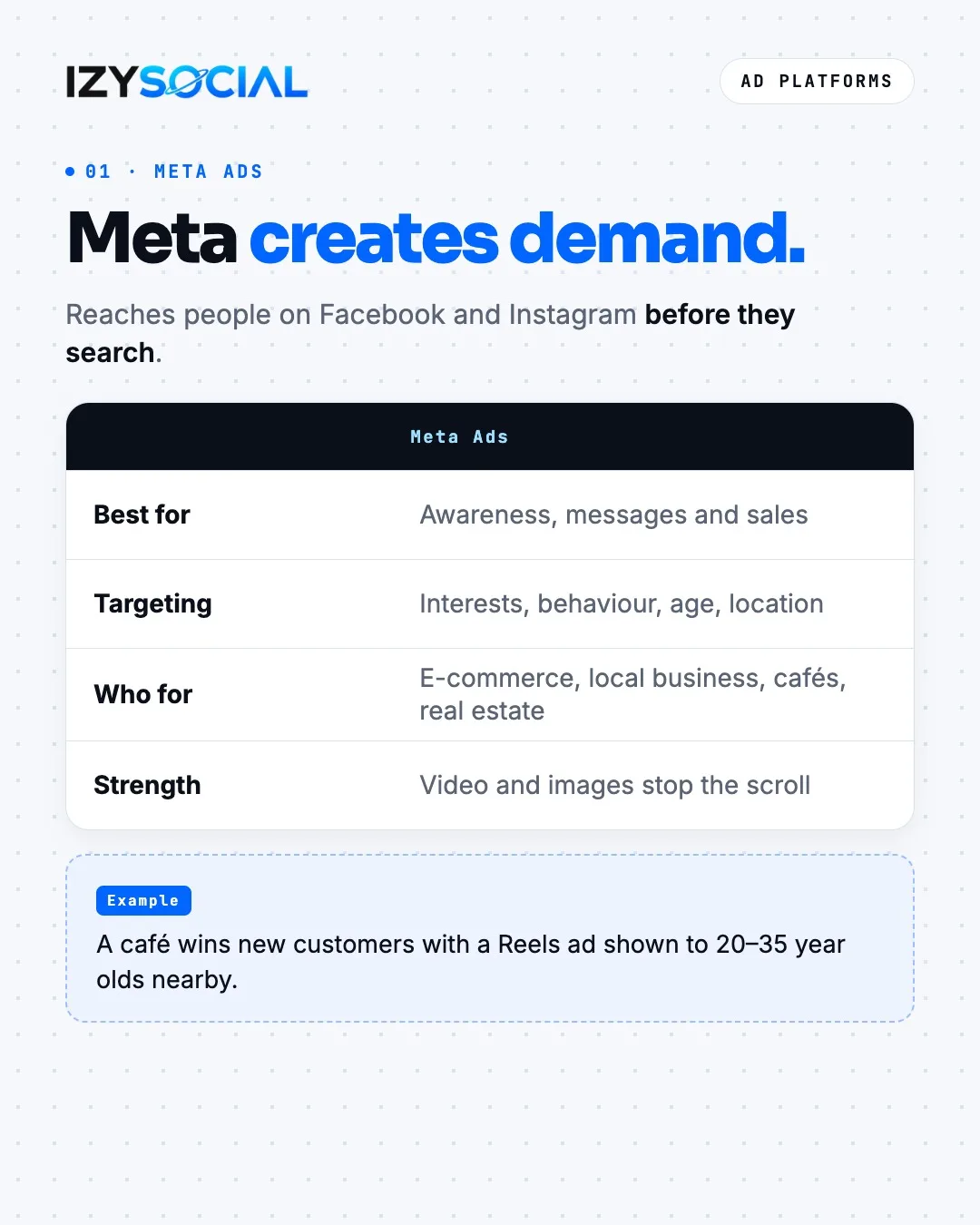
Meta ads run on Facebook and Instagram and reach people who are not searching for your product yet. Targeting is based on interests, behaviour, age and location. Their strength is visual: a good Reels video or image stops someone mid-scroll and makes them notice what you sell.
Meta works well for awareness, collecting messages and sales. It suits e-commerce, local businesses, cafés and restaurants, and real estate, anything that sells on looks. A café, for example, can win new customers with a Reels ad shown to 20–35 year olds nearby.
Every step from account setup to budget is in our Meta Ads guide.
Google Ads: captures demand
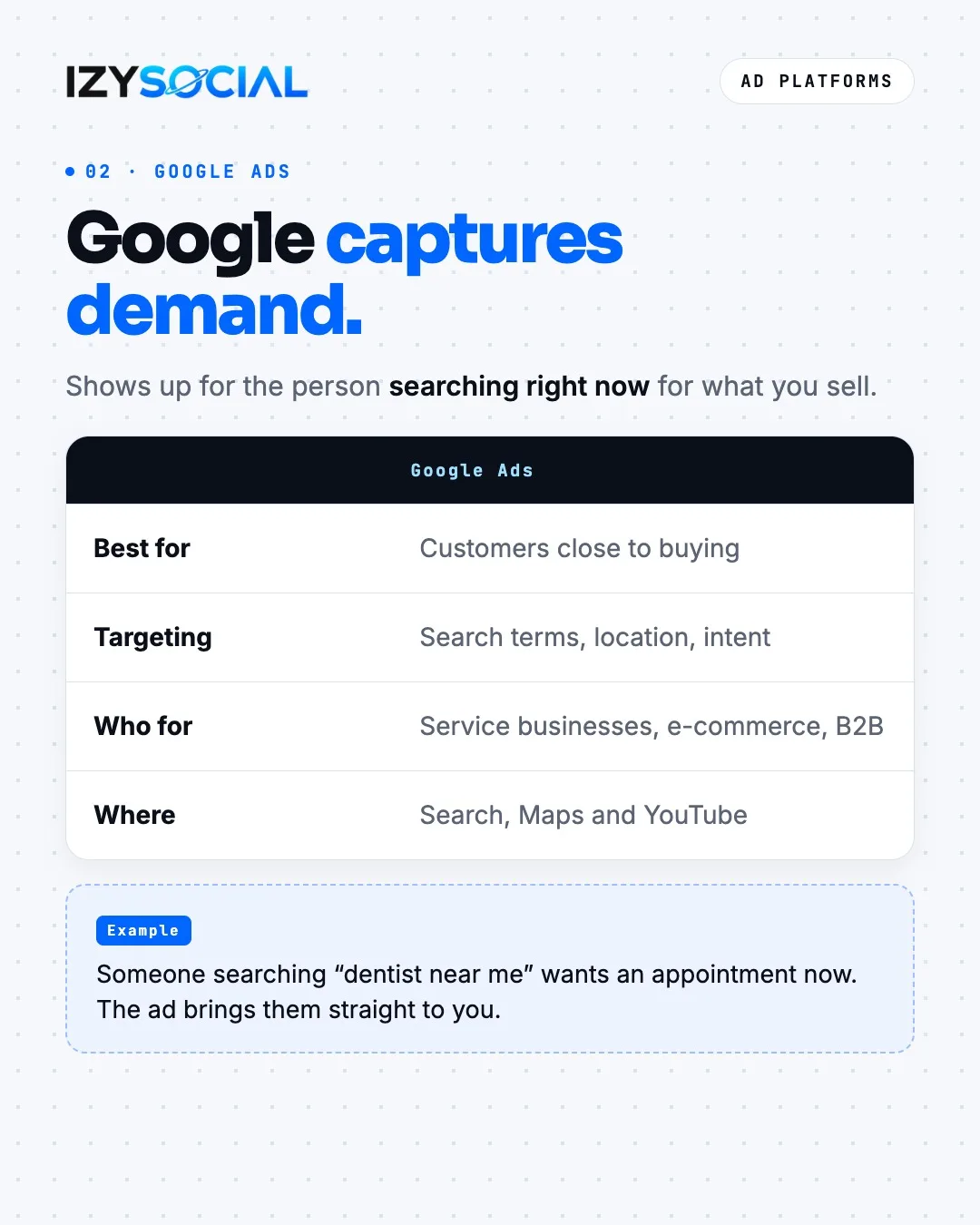
Google ads show up for the person searching right now for what you sell. Targeting is built on search terms, location and intent, and your ad can appear in Google Search, Maps and YouTube.
This is the best place to catch customers who are close to buying. It is strong for service businesses, e-commerce and B2B. Someone searching "dentist near me" wants an appointment now, and the ad brings them straight to you.
Campaign types, keyword match types and Quality Score are covered in our Google Ads guide.
LinkedIn Ads: reaches decision makers
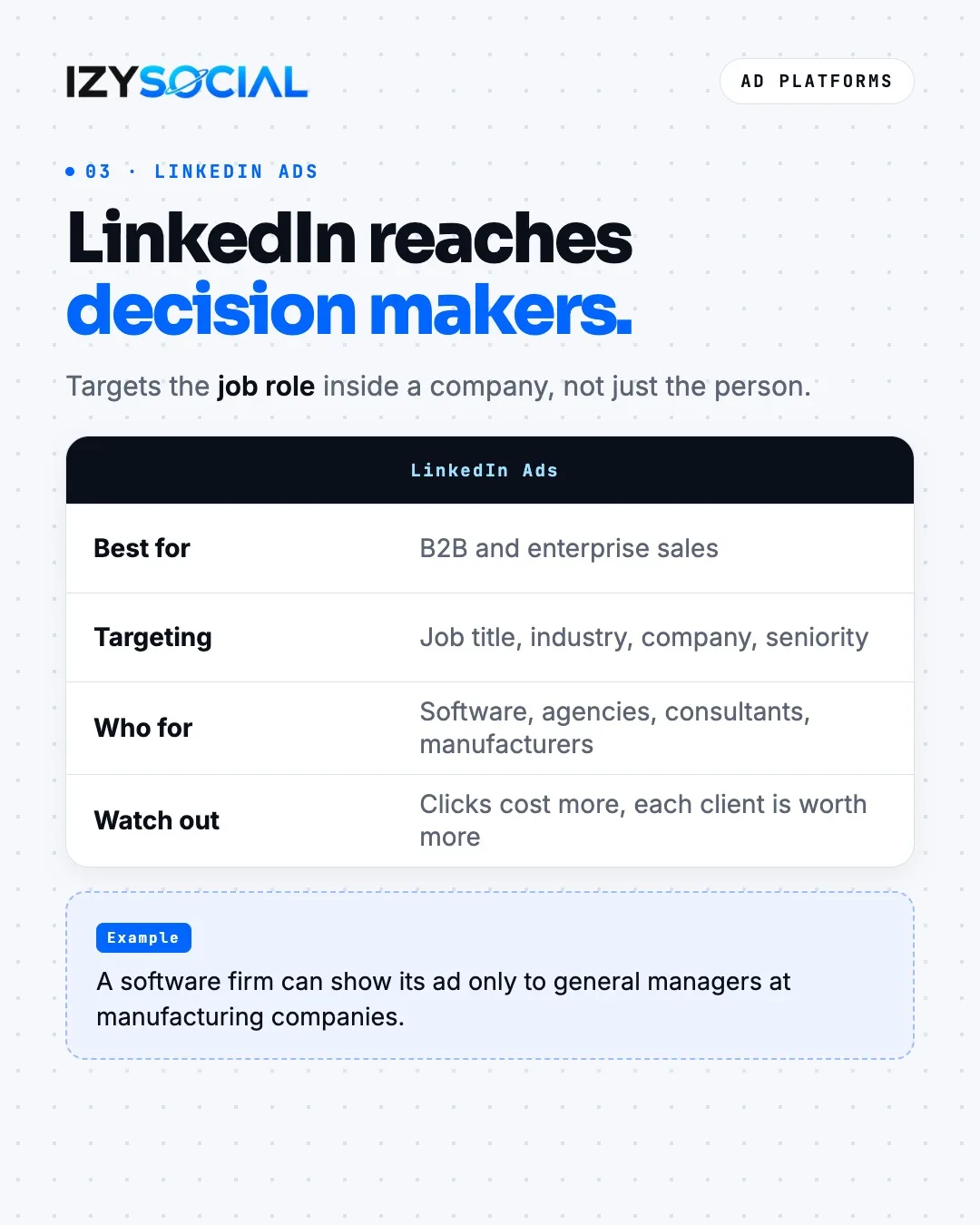
On LinkedIn you target a person's role inside a company: job title, industry, company and seniority. That makes it the most precise platform for B2B and enterprise sales. Software firms, agencies, consultants and manufacturers reach the right person here.
A software company can show its ad only to general managers at manufacturing firms. Clicks usually cost more than on Meta or Google, but one enterprise client often more than covers the difference.
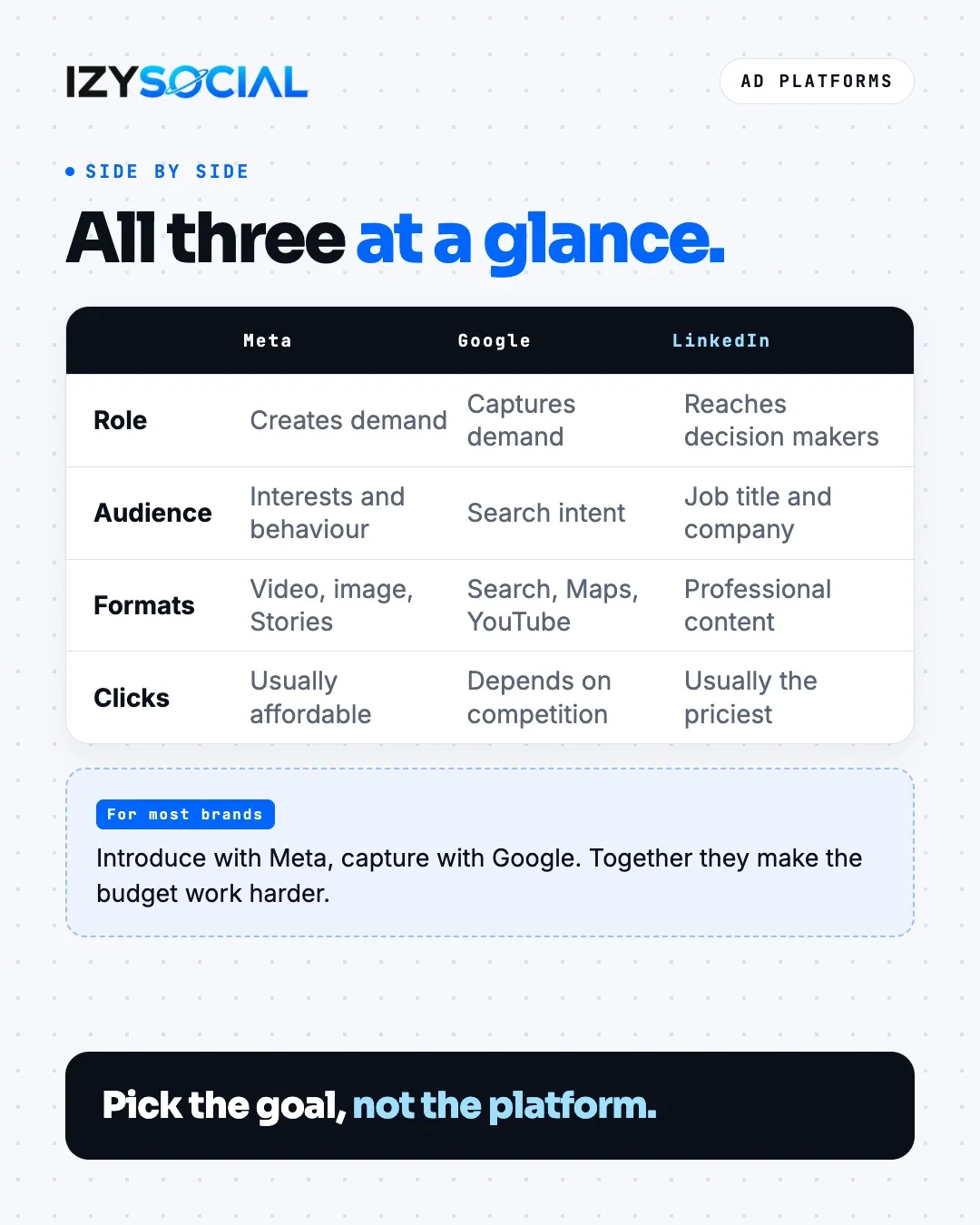
The three platforms side by side
In short: Meta creates demand, Google captures it, LinkedIn reaches decision makers. On Meta the audience is defined by interests and behaviour, on Google by search intent, on LinkedIn by job title and company. Clicks are usually affordable on Meta, depend on competition on Google and tend to be the most expensive on LinkedIn.
A setup that works for most brands: introduce yourself with Meta and capture the demand with Google. Run together, the two make the budget work harder.
Where should you start?
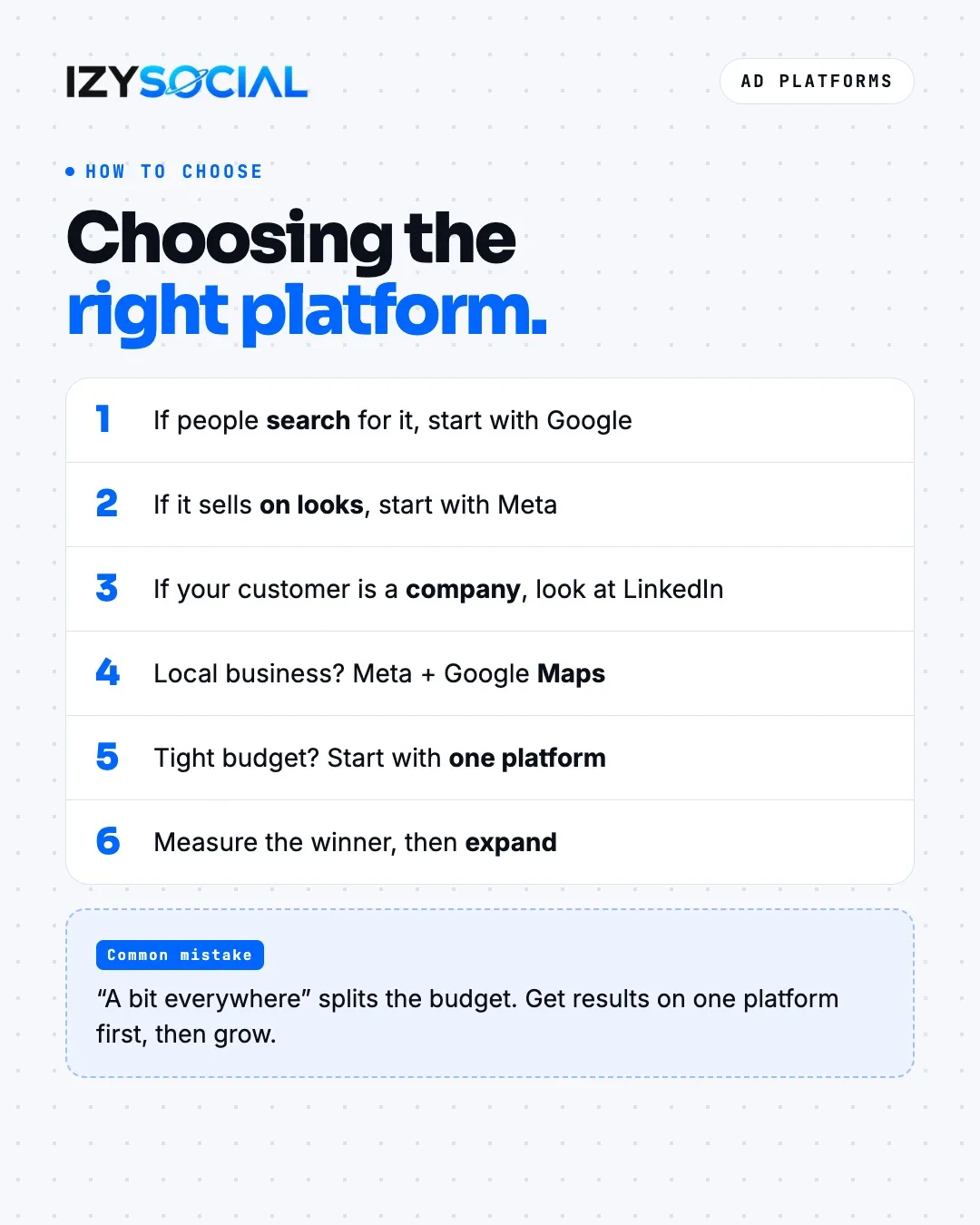
- 1If people search for your product, start with Google.
- 2If it sells on looks, start with Meta.
- 3If your customer is a company, look at LinkedIn.
- 4If you are a local business, use Meta together with Google Maps.
- 5On a tight budget, start with one platform.
- 6Measure which one pays off, then expand.
The most common mistake is splitting the budget into "a bit everywhere". Get results on one platform first, then grow.
Frequently asked questions
Which ad platform should a small business start with?
If you offer a service people search for, start with Google. If you sell a product that looks good, start with Meta. For local businesses Meta and Google Maps work well together. On a tight budget, get results on one platform first.
What is the main difference between Meta and Google ads?
Google catches the person searching for something right now, and its targeting starts from the search term. Meta reaches people scrolling their feed before they search; targeting is based on interests and behaviour, and the creative does most of the work.
Why are LinkedIn ads more expensive?
LinkedIn lets you target people by work details such as job title, industry and company. That audience is narrower and more valuable, so clicks usually cost more. In B2B sales, the value of a single client can cover the difference.