

Ads Alone Are Not Enough: How Content and Ads Work Together
Updated: October 29, 2026 · 3 min read
Many businesses assume more ad budget means more sales. Usually it does not, because an ad only brings people to the door. Your profile, content and offer decide whether they come in. Here we explain the difference between content and ads, how they work together and what to check before you spend.
The difference between content and ads
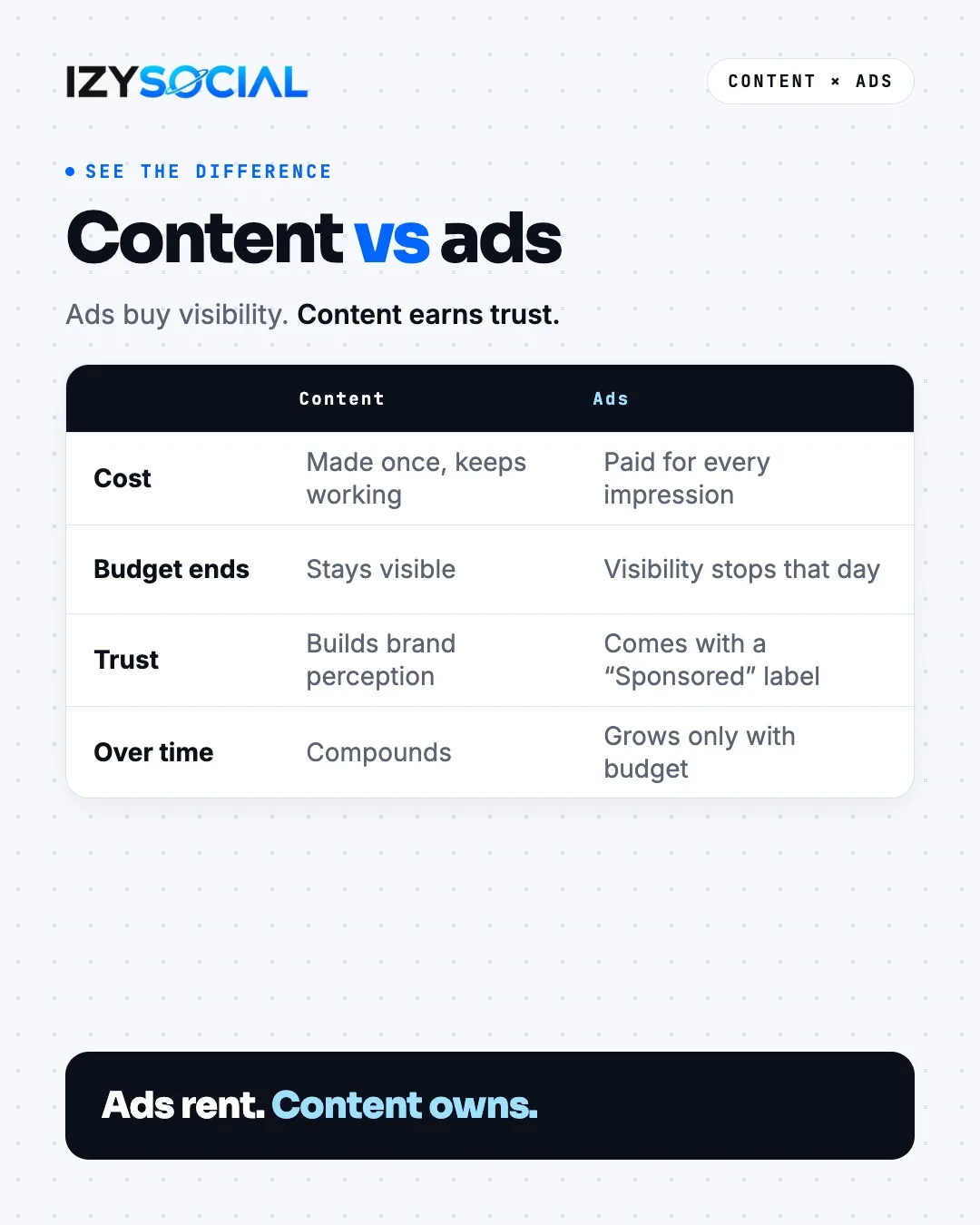
Ads buy visibility: you pay for every impression or click, and the day the budget ends, visibility ends too. Content is made once and keeps working after it is posted. It gets saved, shared and seen by profile visitors months later.
Trust works differently too. An ad comes with a "Sponsored" label, while content builds how people see the brand. In short, ads rent attention and content owns it.
Why content comes first
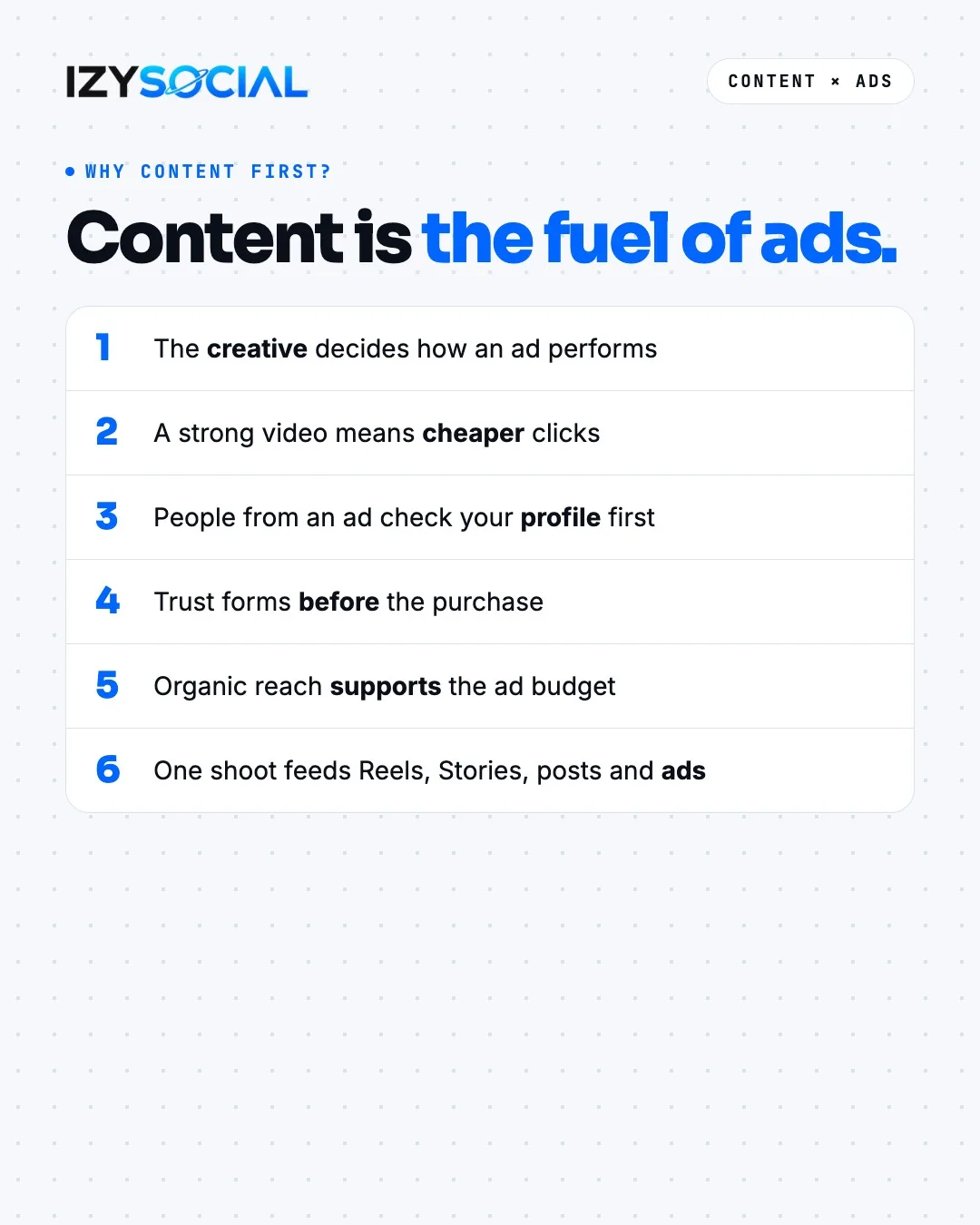
On Meta, the creative has the biggest effect on results. A video that stops the scroll gets more engagement, which usually means cheaper clicks. People who see an ad often check your profile before they buy; if they find an empty or messy feed, they leave.
That is why good content is the fuel for ads. Turning a Reels video that already performs well organically into an ad often beats building an ad creative from scratch. Getting Reels, Stories, posts and ads out of a single shoot also protects the budget.
How to make content that sells
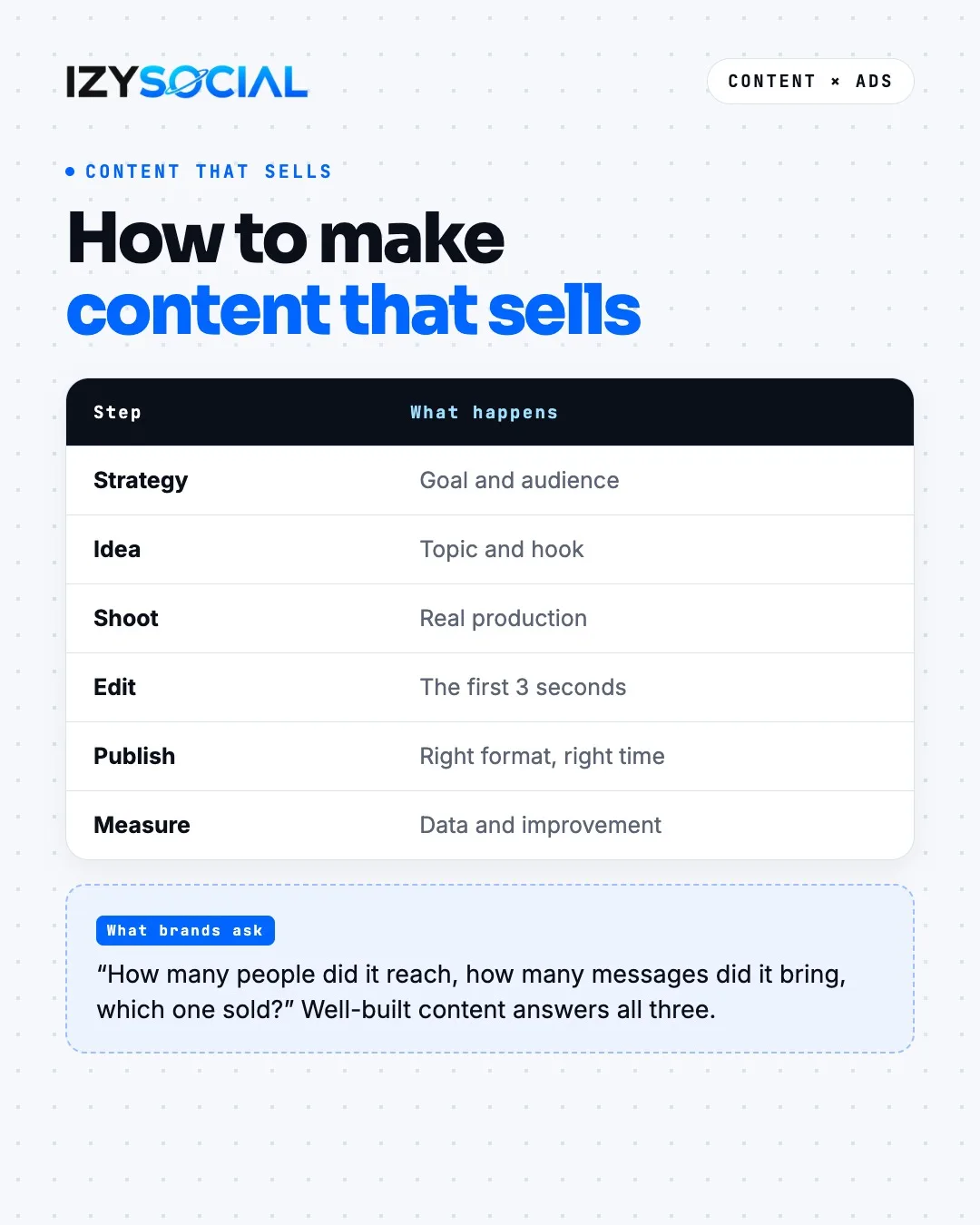
Content that sells takes six steps: a strategy that sets the goal and audience, an idea with a topic and a hook, a real shoot, an edit that focuses on the first 3 seconds, publishing in the right format at the right time, and finally measuring and improving.
Brands ask three things of content: how many people did it reach, how many messages did it bring, which one sold? A well-built content plan answers all three.
Setting up ads the right way
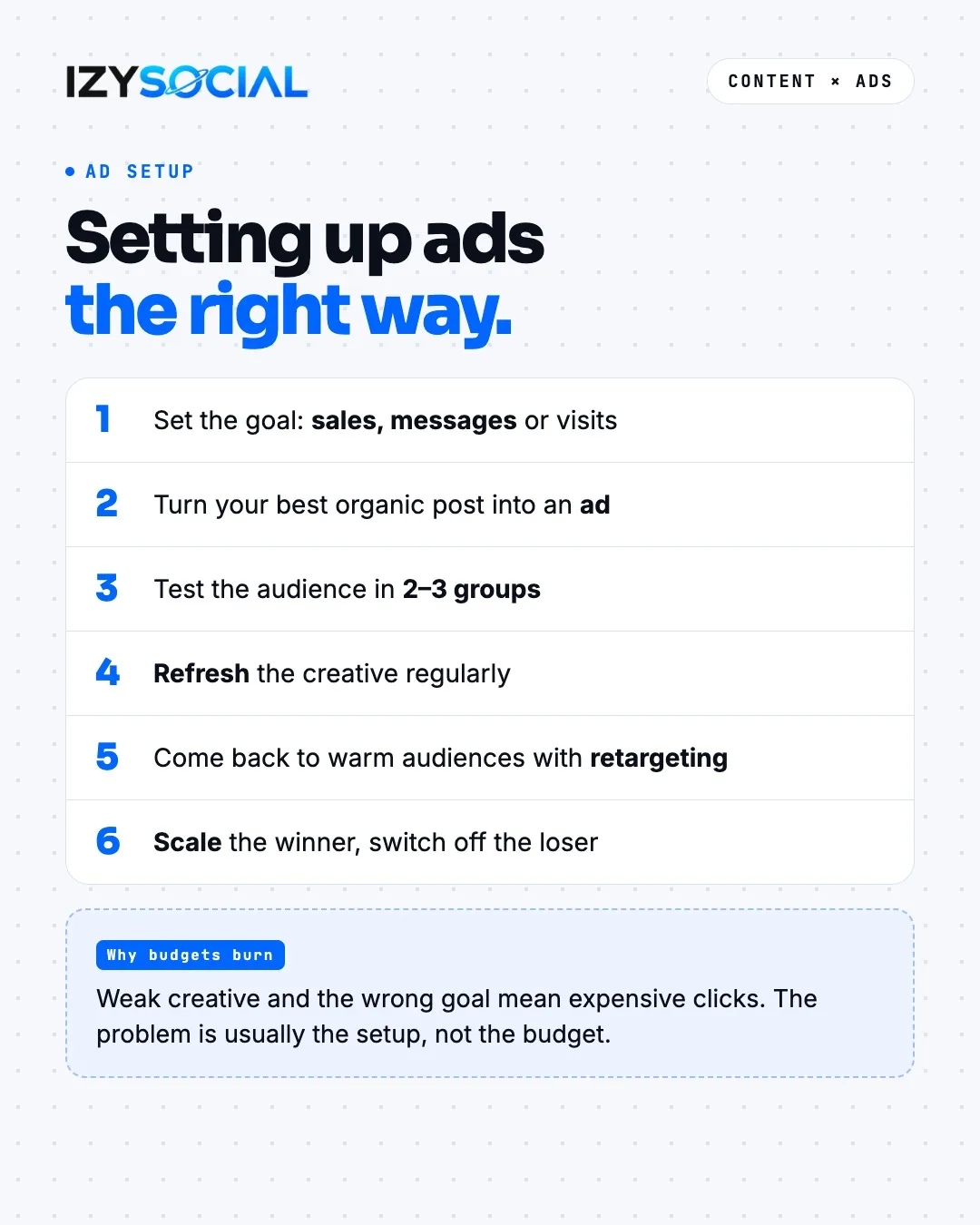
- 1Set the goal: sales, messages or website visits.
- 2Turn your best organic post into an ad.
- 3Test the audience in 2–3 groups.
- 4Refresh the creative regularly.
- 5Come back to warm audiences with retargeting.
- 6Scale the winner and switch off the loser.
Budgets usually burn because of weak creative and the wrong goal. The problem is the setup more often than the budget. We cover campaign setup step by step in our Meta Ads guide.
What an account audit looks at
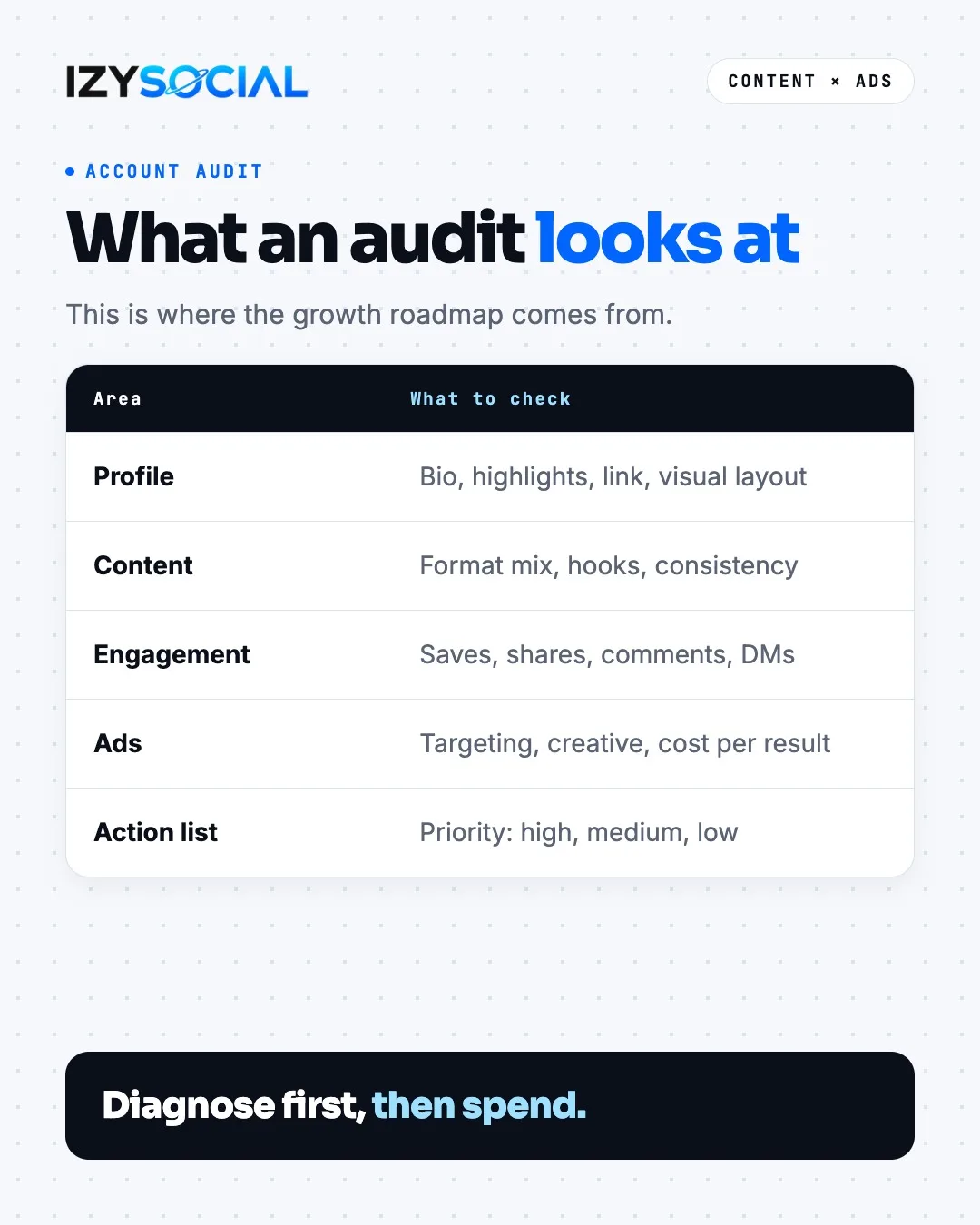
Before raising the budget, you need to see where the account stands. An audit covers five areas: the profile (bio, highlights, link, visual layout), content (format mix, hooks, consistency), engagement (saves, shares, comments, DMs), ads (targeting, creative, cost per result) and an action list ranked by priority.
The 6 foundations of a strong account
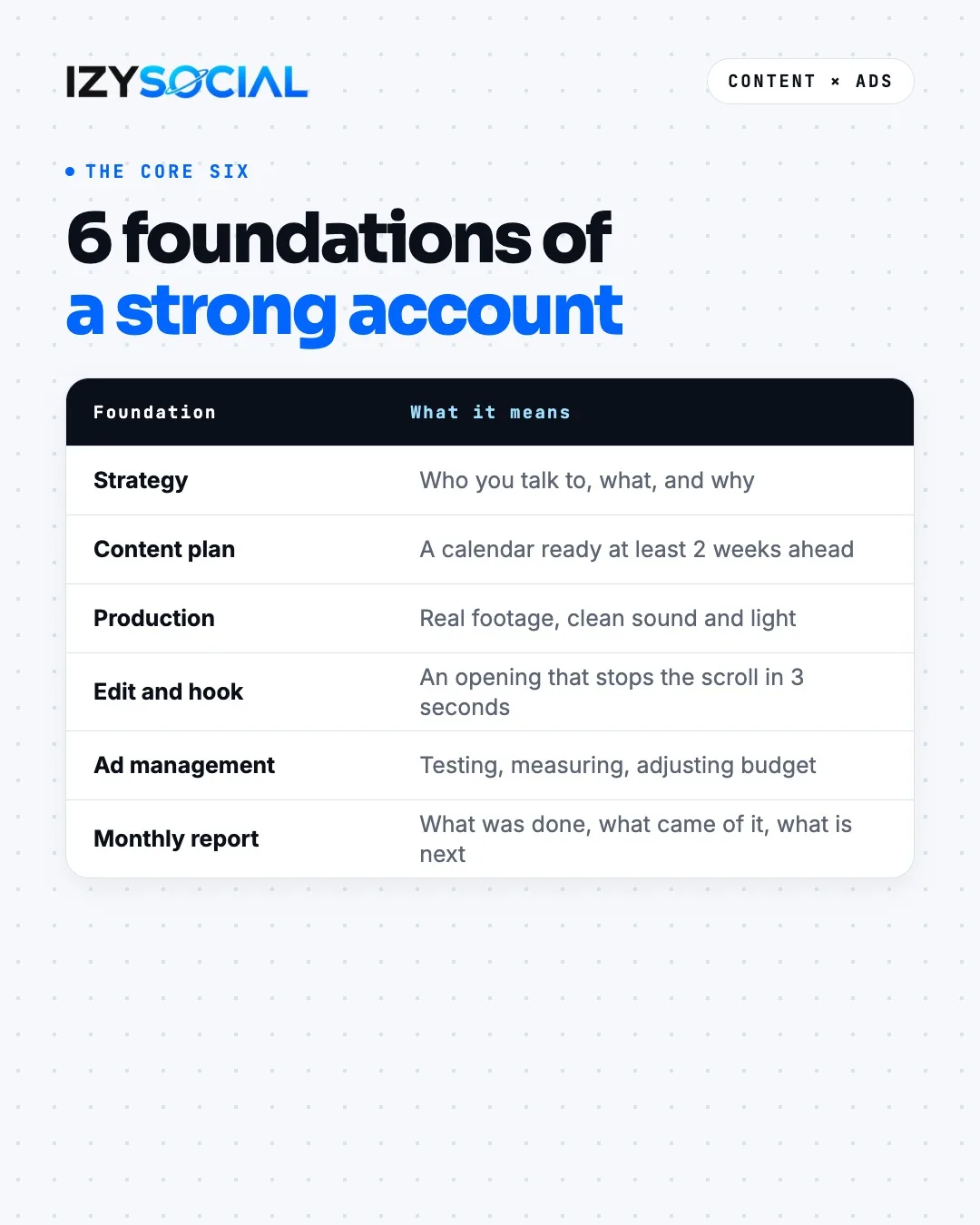
Accounts that grow over time share six foundations: a strategy that defines who you talk to, what and why; a content calendar ready at least two weeks ahead; real footage with clean sound and light; an edit that stops the scroll in 3 seconds; ad management with regular testing and budget changes; and a monthly report showing what was done, what came of it and what is next.
Frequently asked questions
Can you make sales with ads alone?
You can, but it usually costs more. People who arrive from an ad look at your profile and content, and if trust is missing they do not buy. With strong content, the same budget brings more results.
Which content should become an ad?
Posts that get the most saves, shares and messages organically are good candidates. Content your audience already responds to usually works better as an ad too.
How often should ad creative change?
There is no fixed timeline. When the same audience has seen an ad many times, cost per result starts to rise. When you see that rise, refresh the creative with a new hook or a new visual.