

What Is Performance Marketing? Notes from CPC and CPA to ROAS and Scaling
Updated: October 29, 2026 · 4 min read
If you run ads, you need to measure them. Performance marketing is an approach where every unit of spend is tied to a result: a click, a form or a sale. These notes cover what you need to know from the basics to the advanced level, with numbers.
What is performance marketing?
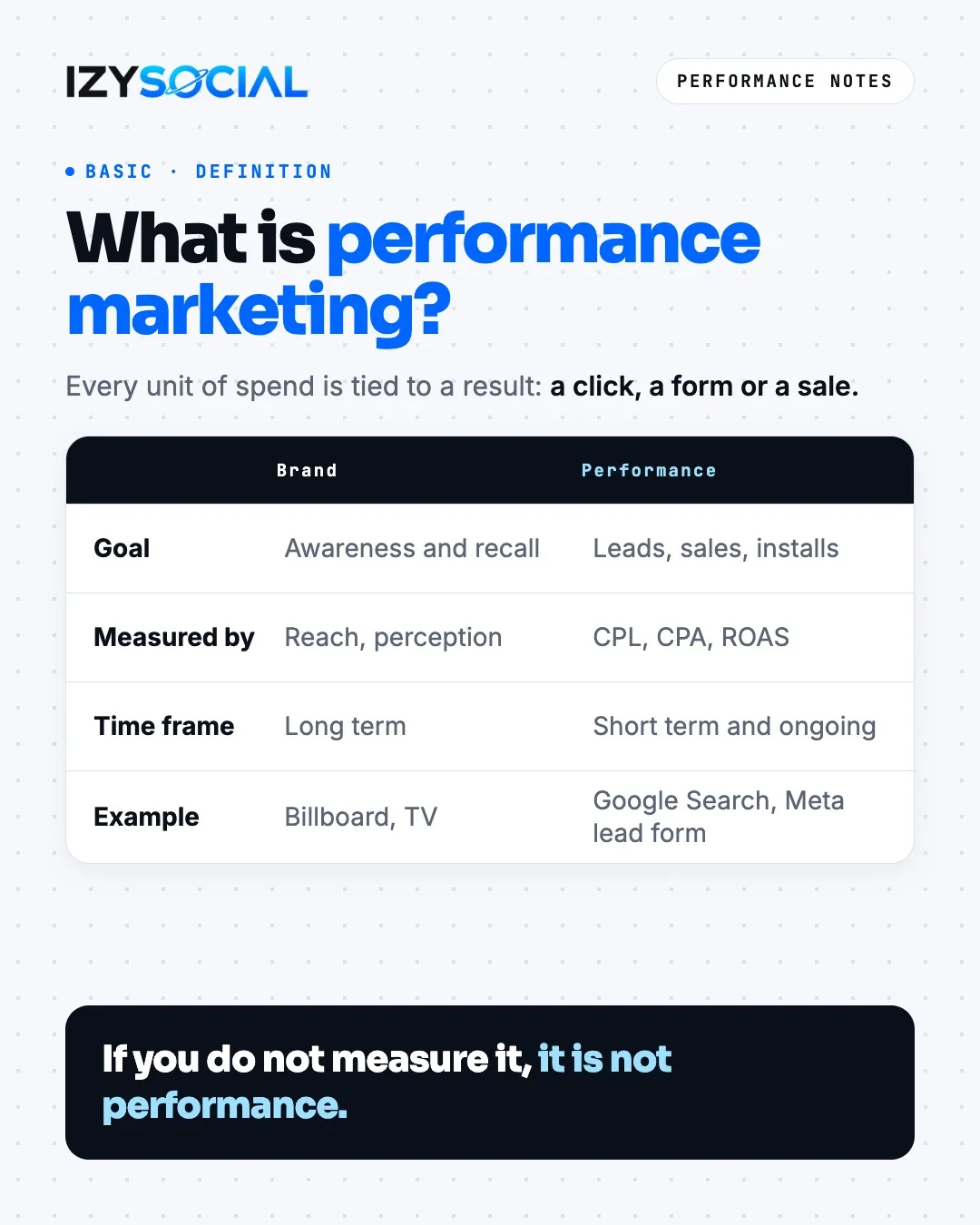
Brand advertising aims for awareness and recall; it is measured by reach and perception, and its results show over the long term. Performance marketing aims for a measurable result such as a lead, a sale or an app install. It is measured with metrics like CPL, CPA and ROAS and optimised continuously.
Billboards and TV are examples of brand advertising, while Google Search ads and Meta lead forms are performance. If you are not measuring, you are not doing performance marketing.
What do you pay for? Pricing models
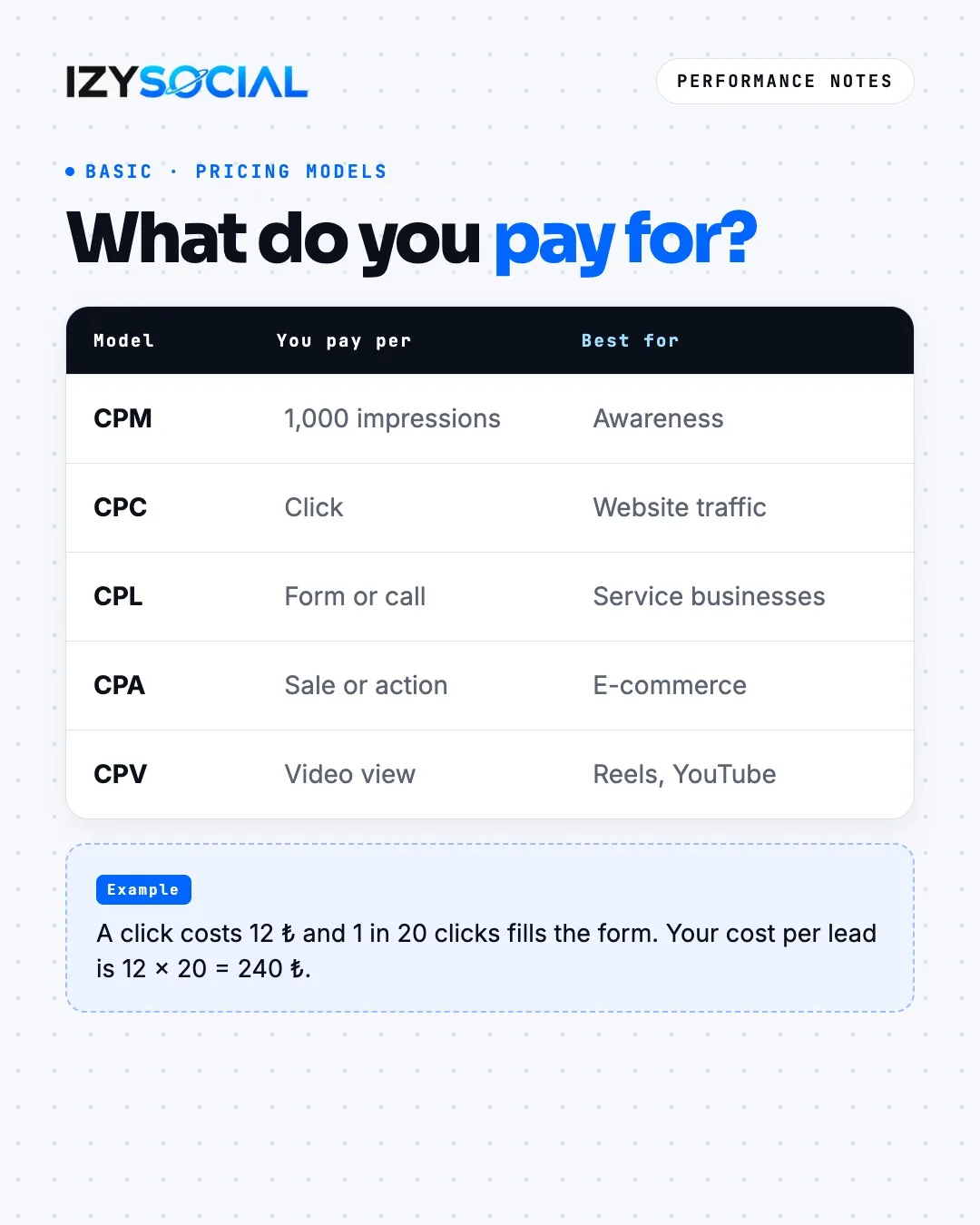
With CPM you pay per thousand impressions, which suits awareness campaigns. With CPC you pay per click, used for website traffic. CPL is the cost per lead (a form or a call), CPA the cost per sale or specific action, and CPV the cost per video view.
An example: if a click costs 12 ₺ and 1 in every 20 clicks fills the form, your cost per lead is 12 × 20 = 240 ₺. Knowing this maths shows you which campaign is really profitable.
Which channel is right?
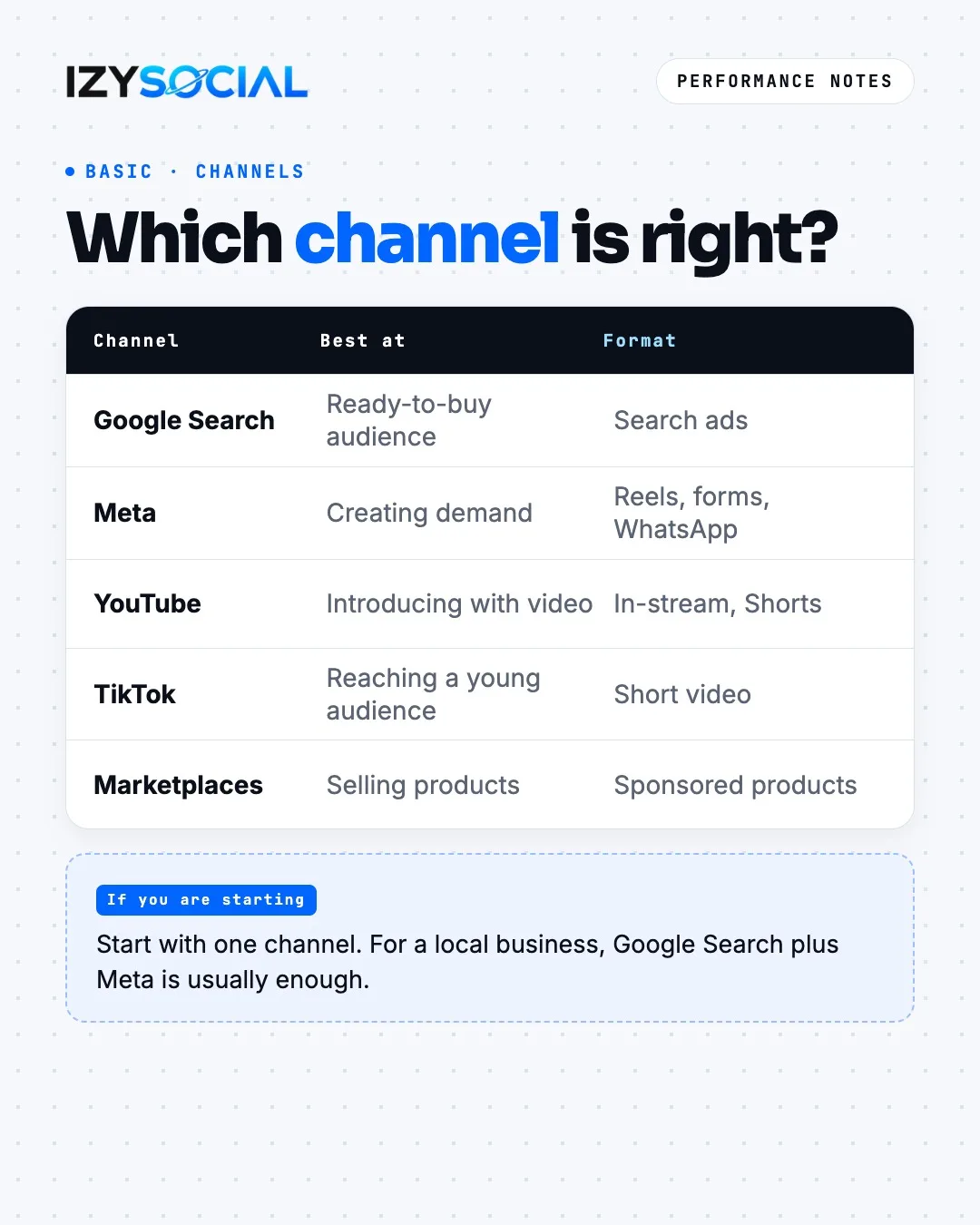
Google Search catches people searching right now who are ready to buy. Meta is strong at creating demand, with Reels, lead forms and WhatsApp ads. YouTube is for introducing yourself with video, TikTok for reaching a young audience, and marketplaces for direct sales through sponsored products.
If you are starting out, start with one channel. For a local business, Google Search plus Meta is usually enough.
We compare Meta, Google and LinkedIn side by side in our ad platform comparison.
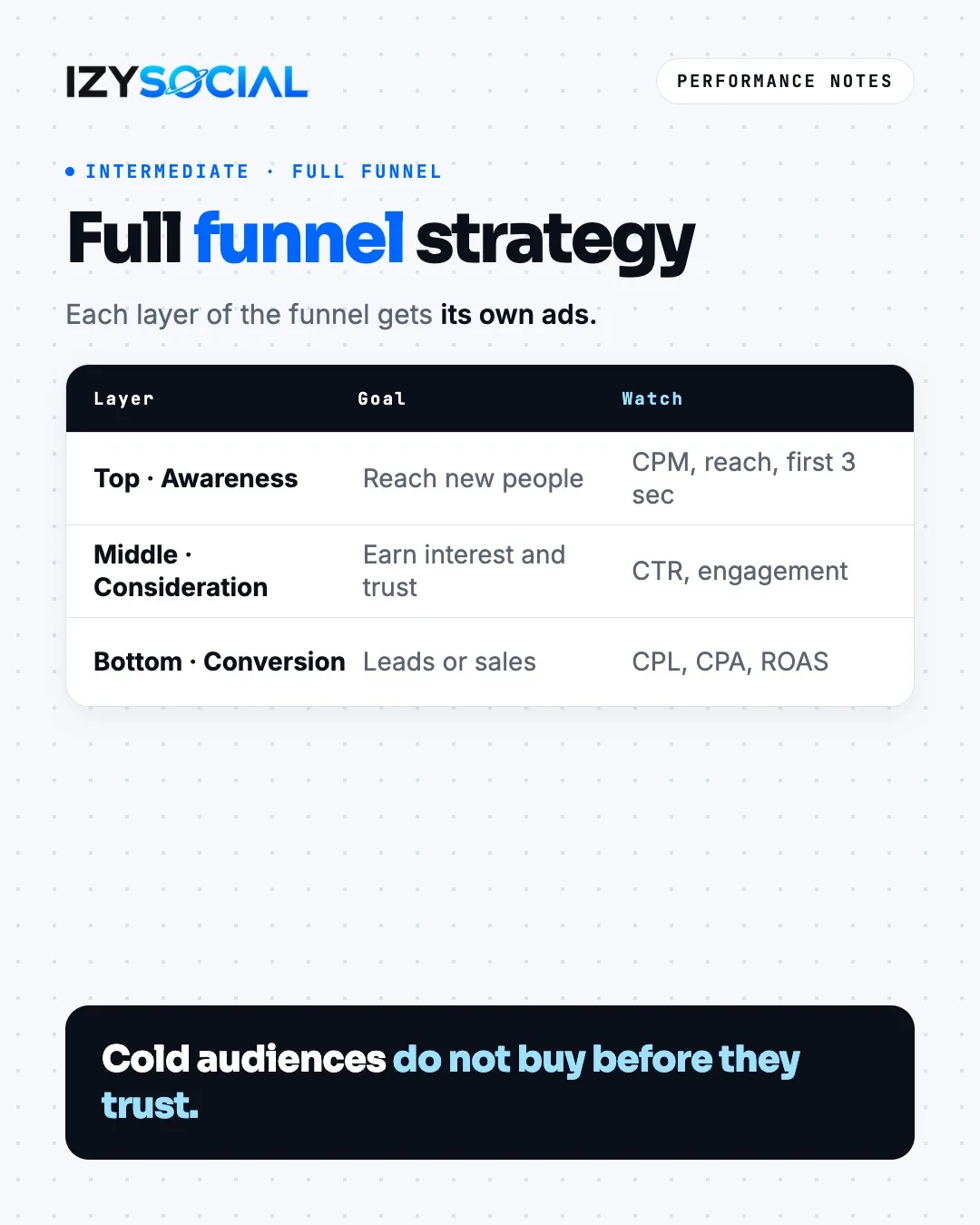
Full-funnel strategy
The top of the funnel is awareness: the goal is to reach new people, and you watch CPM, reach and the first 3 seconds of viewing. The middle is consideration: the goal is to earn interest and trust, you watch CTR and engagement, and retargeting comes in here. The bottom is conversion: the goal is a lead or a sale, and you watch CPL, CPA and ROAS.
Each layer needs its own ads, because a cold audience that has never heard of you will not buy before it trusts you.
A landing page that sells
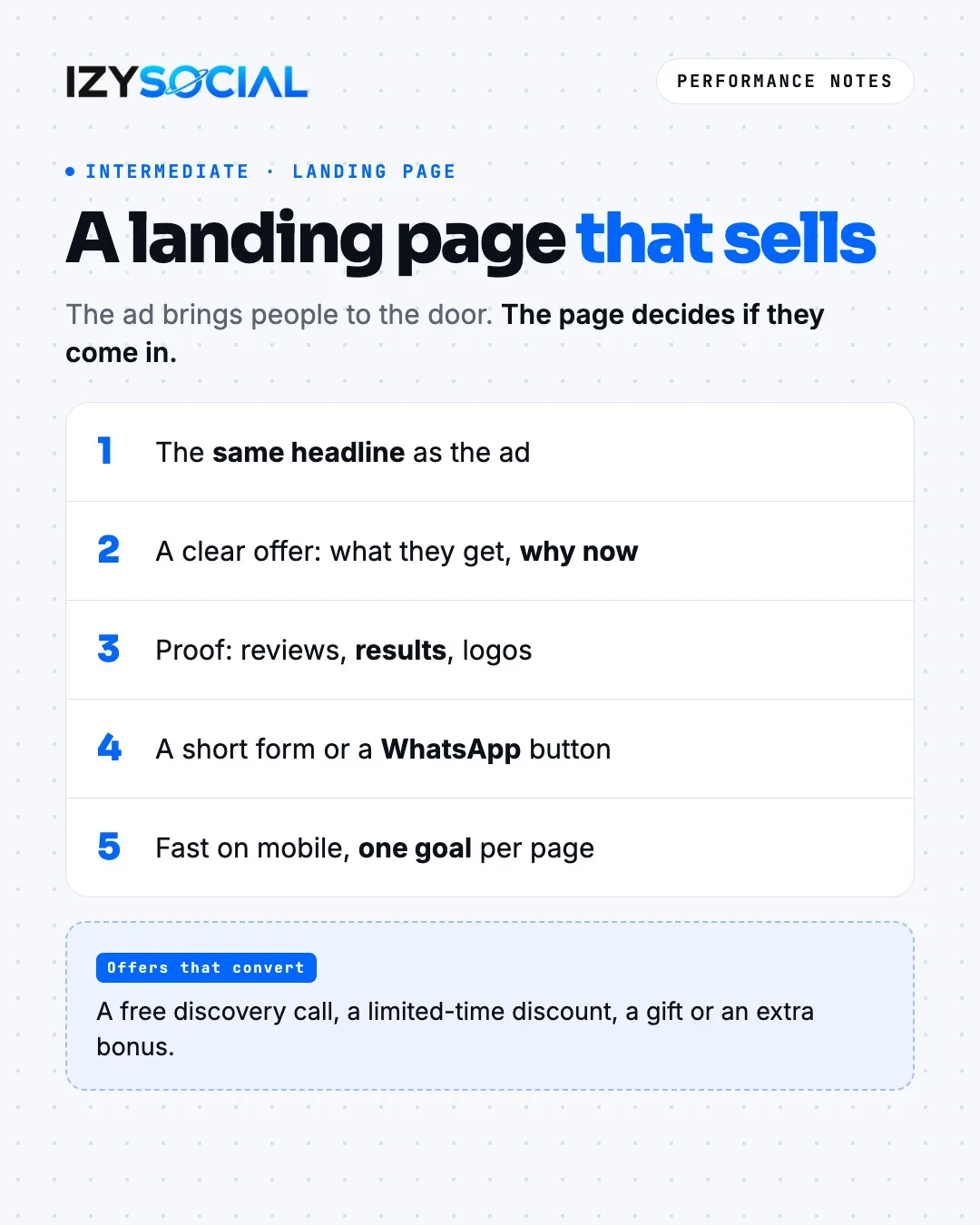
- 1Use the same headline as the ad.
- 2Make the offer clear: what they get and why now.
- 3Add proof: reviews, results, logos.
- 4Add a short form or a WhatsApp button.
- 5Make the page fast on mobile with one goal.
The ad brings people to the door; the page decides whether they come in. A good ad cannot save a weak offer. Offers such as a free discovery call, a limited-time discount or an extra bonus lift conversions.
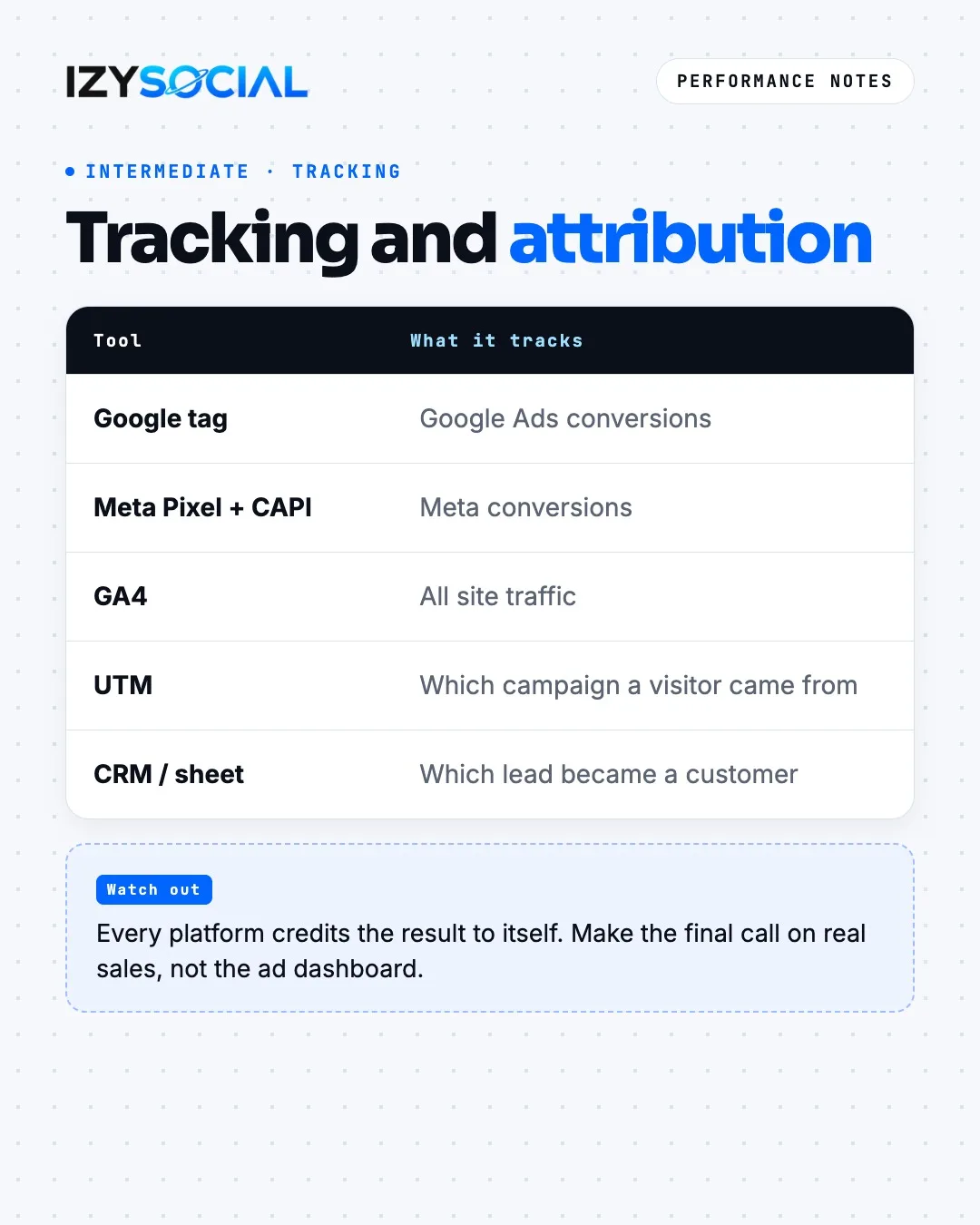
Tracking and attribution
Measurement needs the right tools in place. The Google tag tracks Google Ads conversions, and the Meta Pixel with the Conversions API (CAPI) tracks Meta conversions. GA4 shows all site traffic, and UTM parameters tell you which campaign a visitor came from. A CRM or a simple spreadsheet shows which lead became a customer.
One thing to watch: every platform tends to credit the result to itself. Make the final call on your real sales, not on the numbers in the ad dashboard.
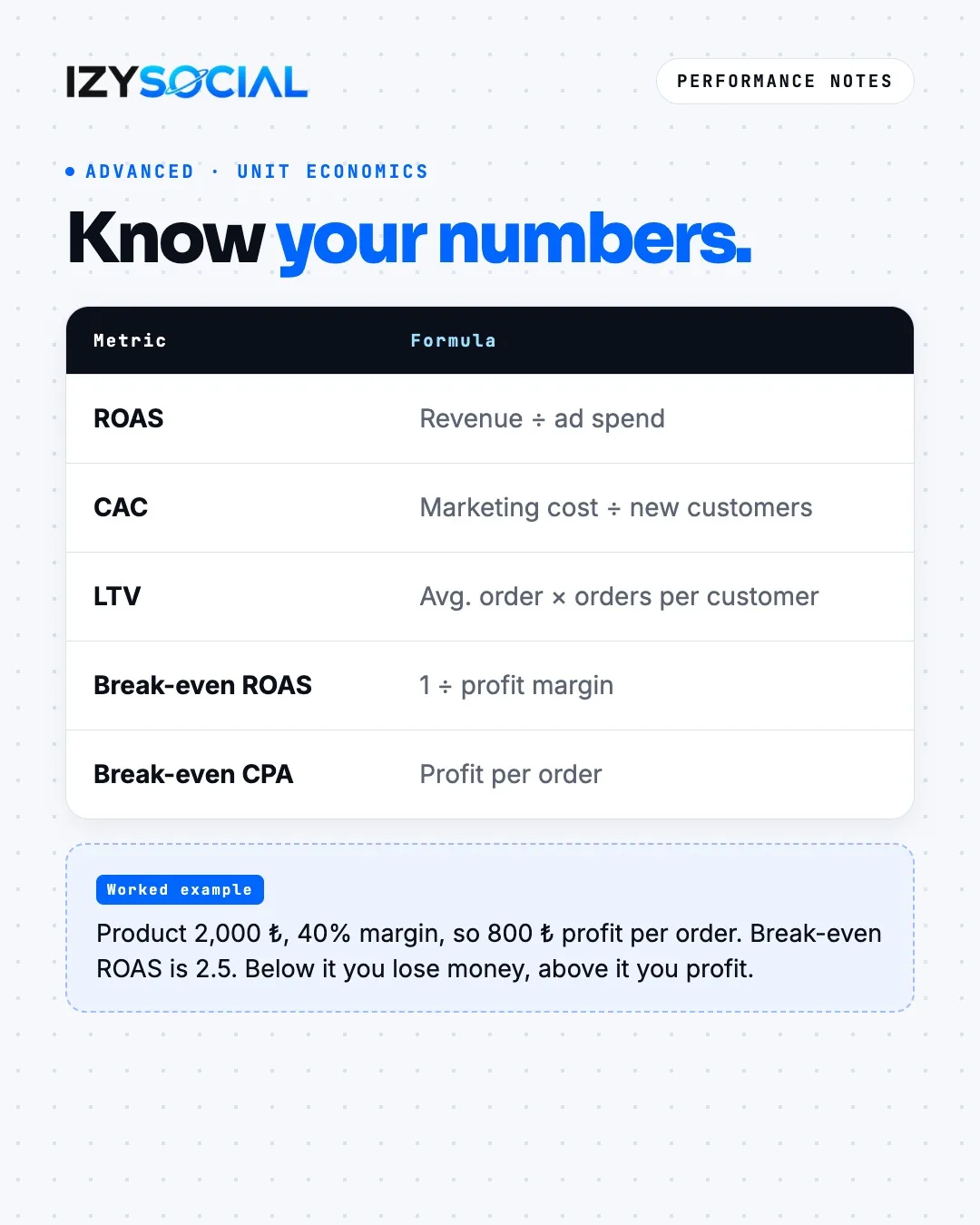
Know your numbers: unit economics
ROAS is revenue from ads divided by ad spend. CAC is total marketing cost divided by the number of new customers. LTV is how much a customer brings you in total; a simple version is average order value × orders per customer. Break-even ROAS is 1 ÷ profit margin, and break-even CPA is your profit per order.
Example: a product sells for 2,000 ₺ with a 40% margin, so profit per order is 800 ₺. Break-even ROAS is 1 ÷ 0.40 = 2.5. Below 2.5 you lose money, above it you profit. Know your margin first, then look at ROAS.
Scaling and routine
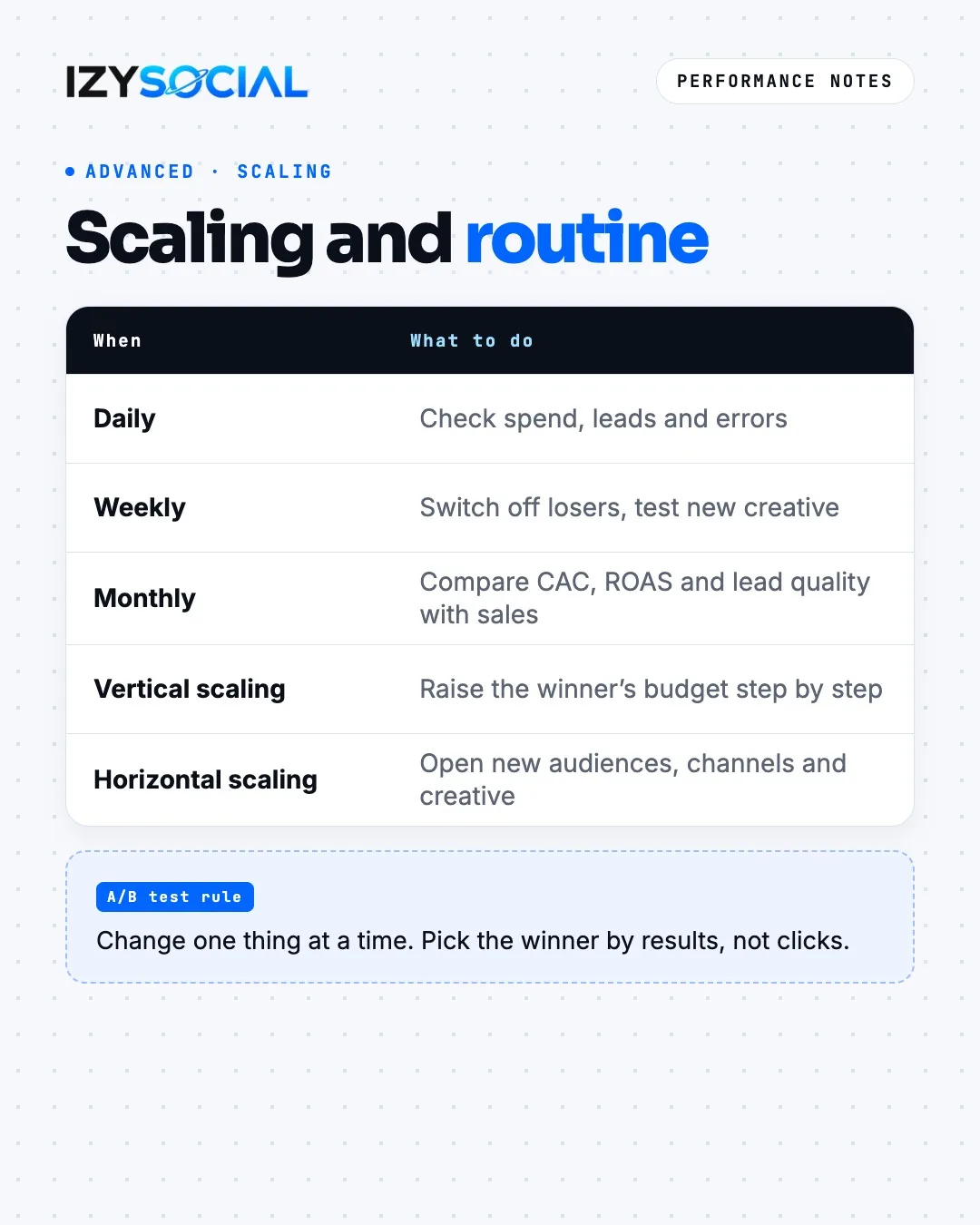
Every day, check spend, incoming leads and errors. Every week, switch off losing ads and test new creative. Every month, compare CAC, ROAS and lead quality with real sales.
There are two ways to grow. Vertical scaling raises the winning ad's budget step by step; horizontal scaling opens new audiences, channels and creative. In an A/B test, change one thing at a time and pick the winner by results, not clicks.
Frequently asked questions
Is performance marketing the same as digital marketing?
No. Digital marketing covers all online marketing work. Performance marketing is the part of it where spend is tied to a measurable result (a click, a lead, a sale) and optimised against that result.
What is a good ROAS?
There is no single right number; it depends on your profit margin. Break-even ROAS is 1 ÷ profit margin. With a 40% margin, anything above 2.5 is profit; with a 20% margin, break-even is 5.
Is the Meta Pixel enough, or do I need CAPI?
The Pixel runs in the browser and can miss some conversions because of ad blockers or cookie limits. The Conversions API sends data from the server; using both together gives more complete measurement.