

What Are SEO, AEO and GEO? A Guide to Being Found on Google and in AI
Updated: October 29, 2026 · 3 min read
Customers no longer only search Google; they also ask ChatGPT, Gemini or Perplexity. That gives visibility three layers: SEO, AEO and GEO. This guide covers how they differ, what each one needs and a 30-day plan you can apply to a single site.
The difference between SEO, AEO and GEO
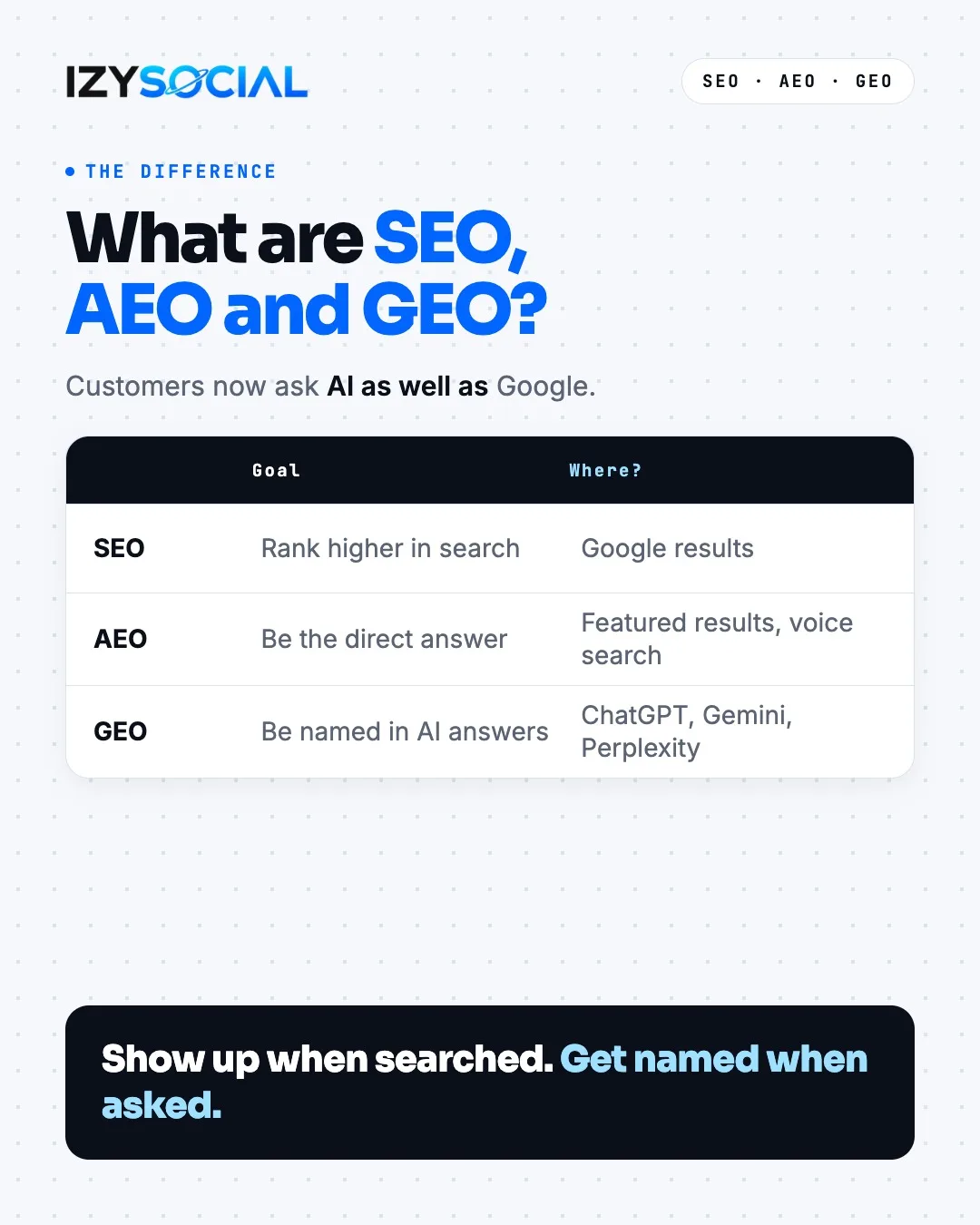
SEO (search engine optimisation) is ranking higher in Google results. AEO (answer engine optimisation) is showing up as the direct answer to a question, which covers featured results and voice search. GEO (generative engine optimisation) is getting your brand named in the answers of AI tools such as ChatGPT, Gemini and Perplexity.
The three are not separate jobs. Google says that optimising for AI search is still, at its core, SEO: clear answers and reliable information on top of solid SEO.
How Google finds you
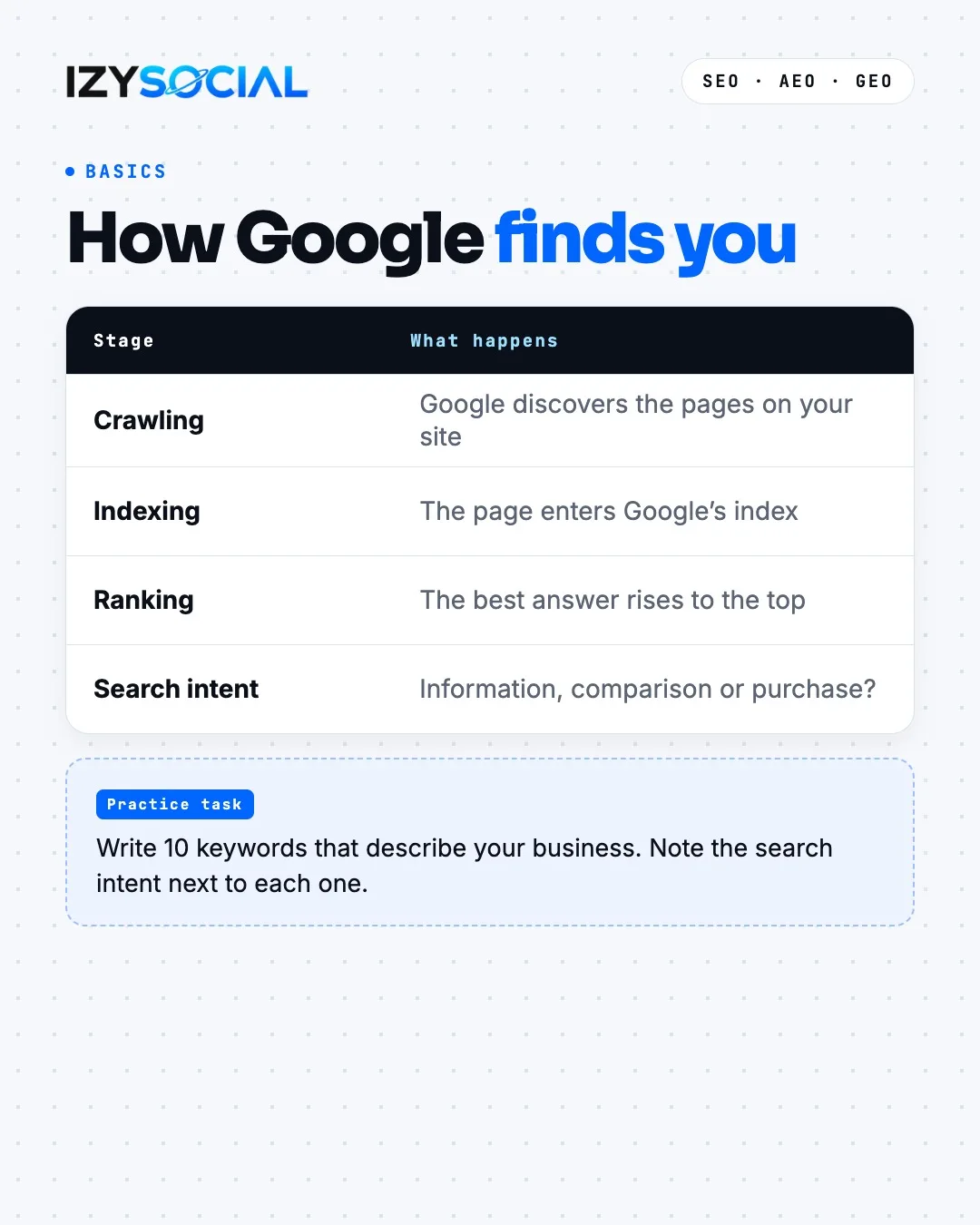
The process has four stages. In crawling, Google discovers the pages on your site. In indexing, the page enters Google's index. In ranking, the page that best answers the searcher rises to the top. Under all of it sits search intent: is the person looking for information, comparing options or ready to buy?
Practice task: write 10 keywords that describe your business and note the search intent next to each one.
On-page SEO
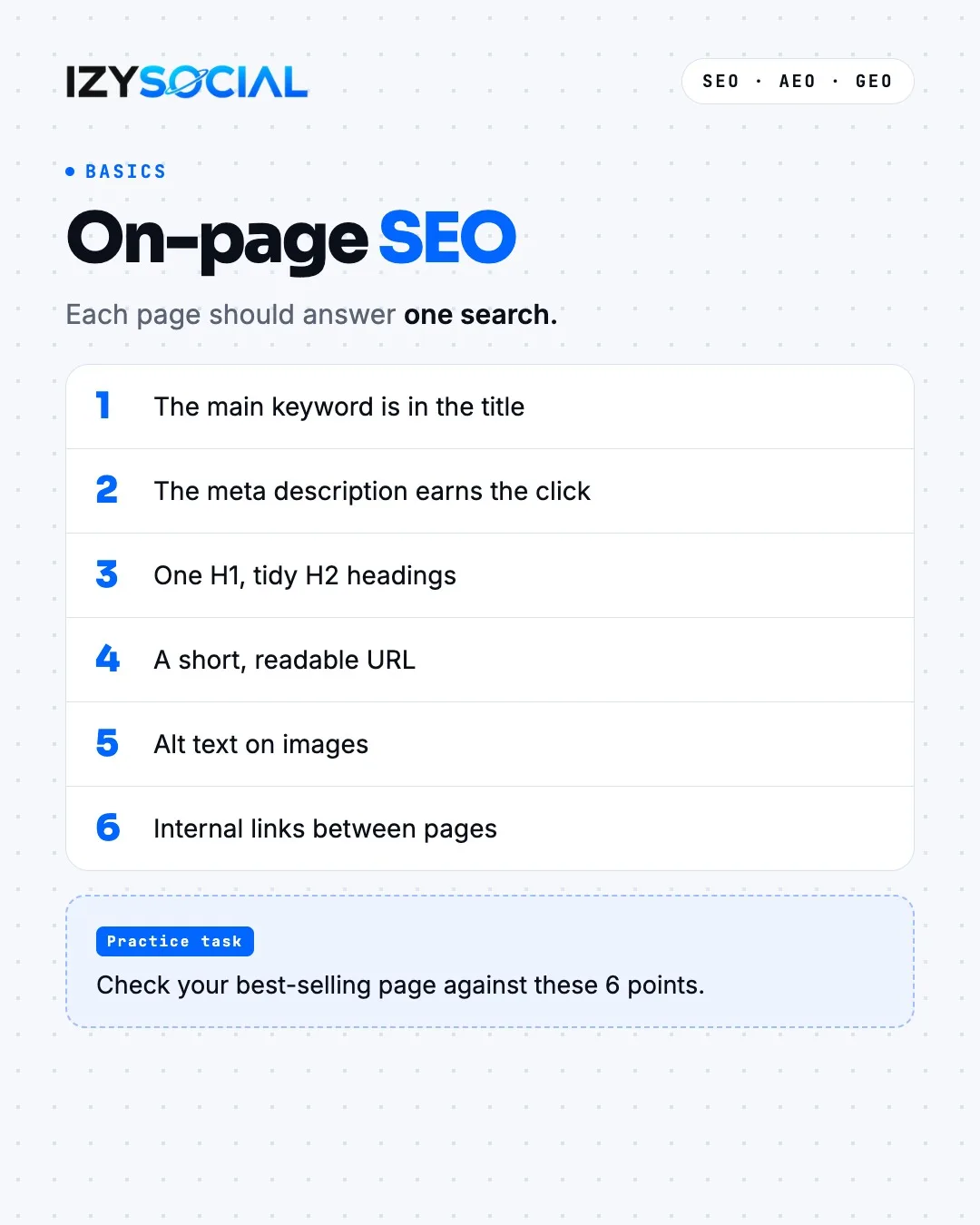
- 1The page title includes the main keyword.
- 2The meta description is written to earn the click.
- 3The page has one H1 and tidy H2 headings.
- 4The URL is short and readable.
- 5Images have alt text.
- 6Pages are connected with internal links.
Each page should answer one search. Start by checking your best-selling page against these six points.
Technical SEO
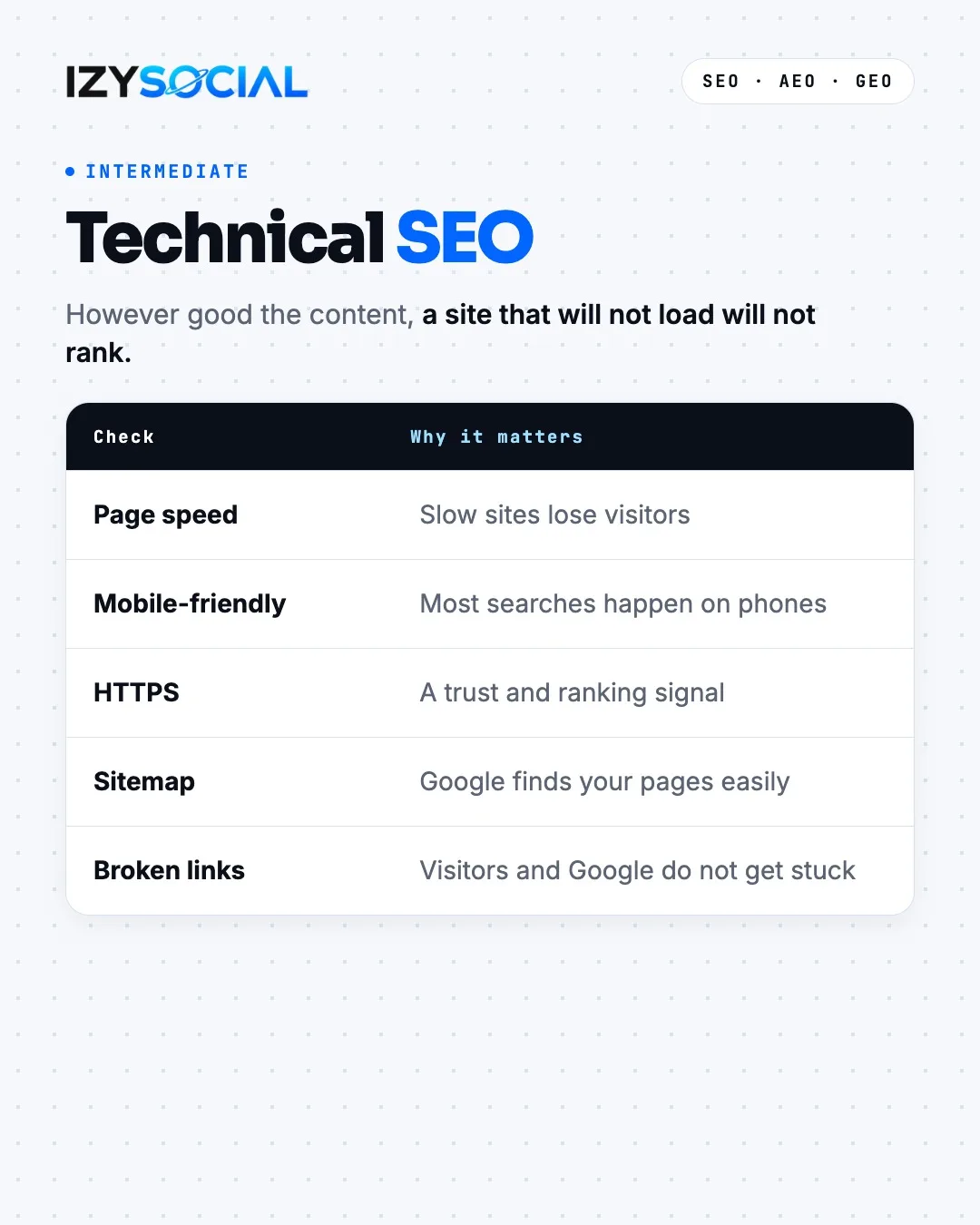
However good the content, a site that will not load or is very slow will not rank. Page speed decides how many visitors you lose. Most searches happen on phones, so mobile-friendliness is a must. HTTPS is both a trust signal and one Google uses. A sitemap helps Google find your pages, and broken links leave both visitors and Google stuck.
Local SEO: Google Business Profile
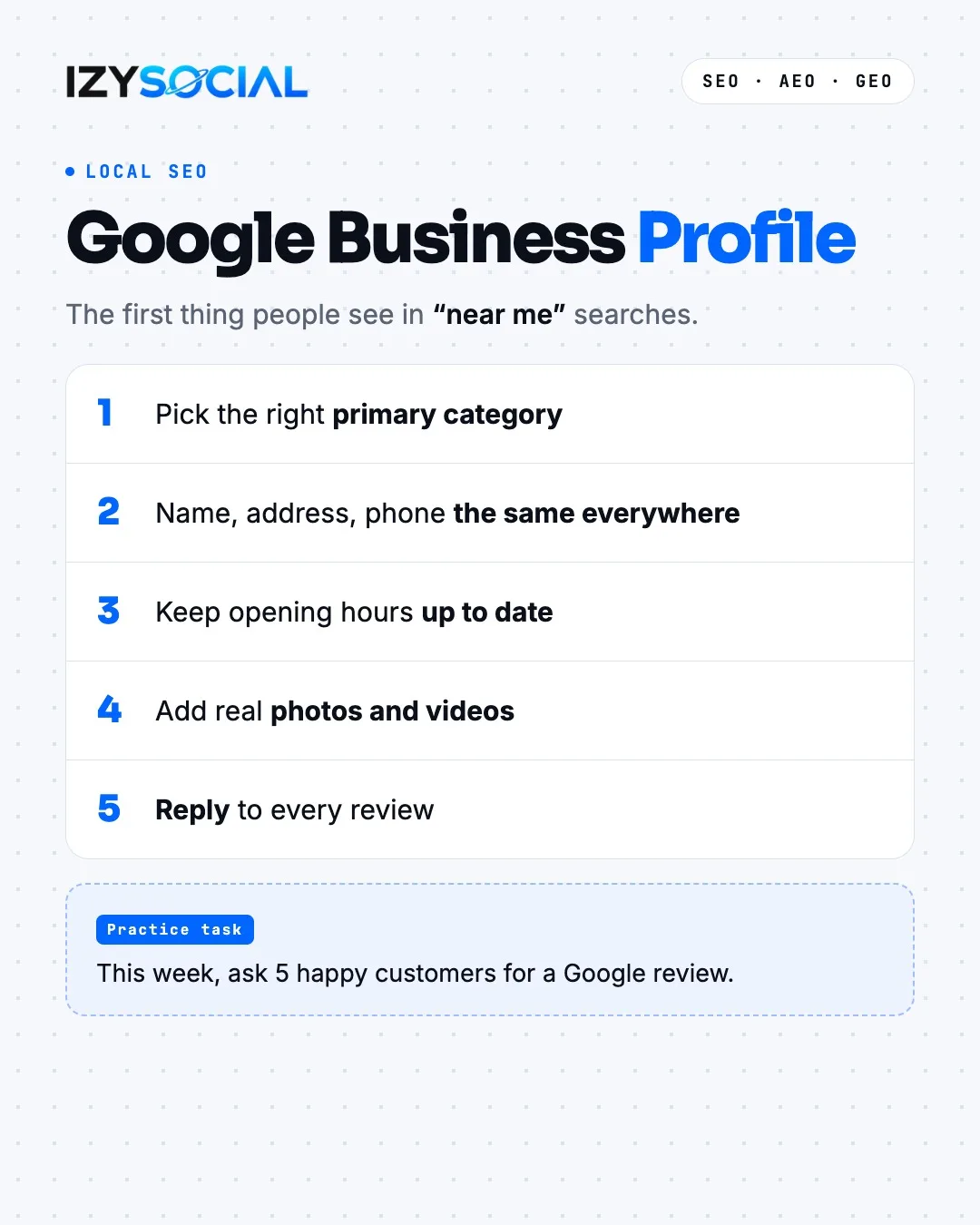
- 1Pick the right primary category.
- 2Keep name, address and phone the same everywhere.
- 3Keep opening hours up to date.
- 4Add real photos and videos.
- 5Reply to every review.
Your Business Profile is the first thing people see in "near me" searches. This week, ask 5 happy customers for a Google review.
AEO: answer the question
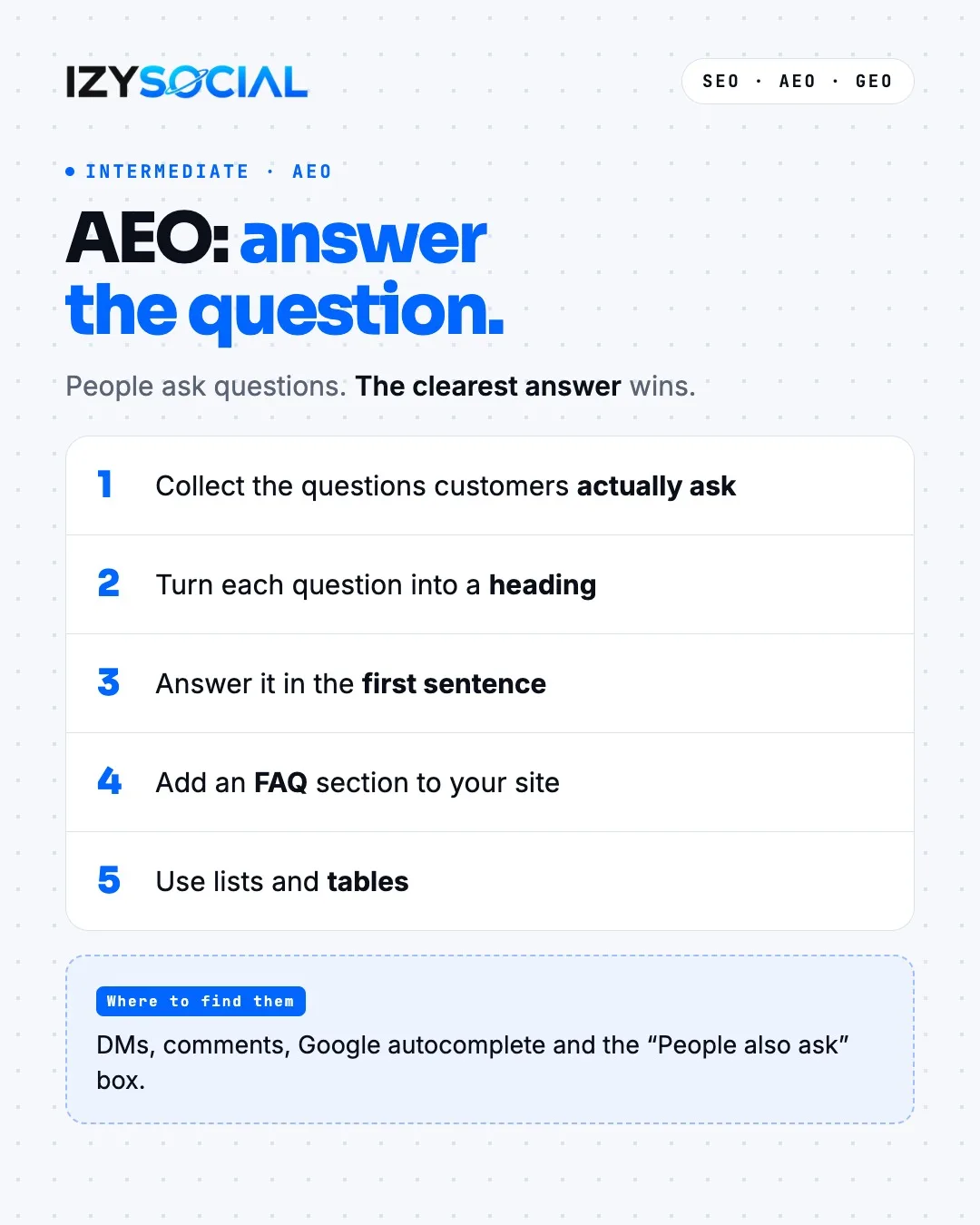
People ask questions, and the clearest answer wins. First collect the questions your customers actually ask; DMs, comments, Google autocomplete and the "People also ask" box are good sources. Then turn each question into a heading, answer it in the first sentence, add an FAQ section to your site and use lists or tables where they fit.
GEO: get named in AI answers
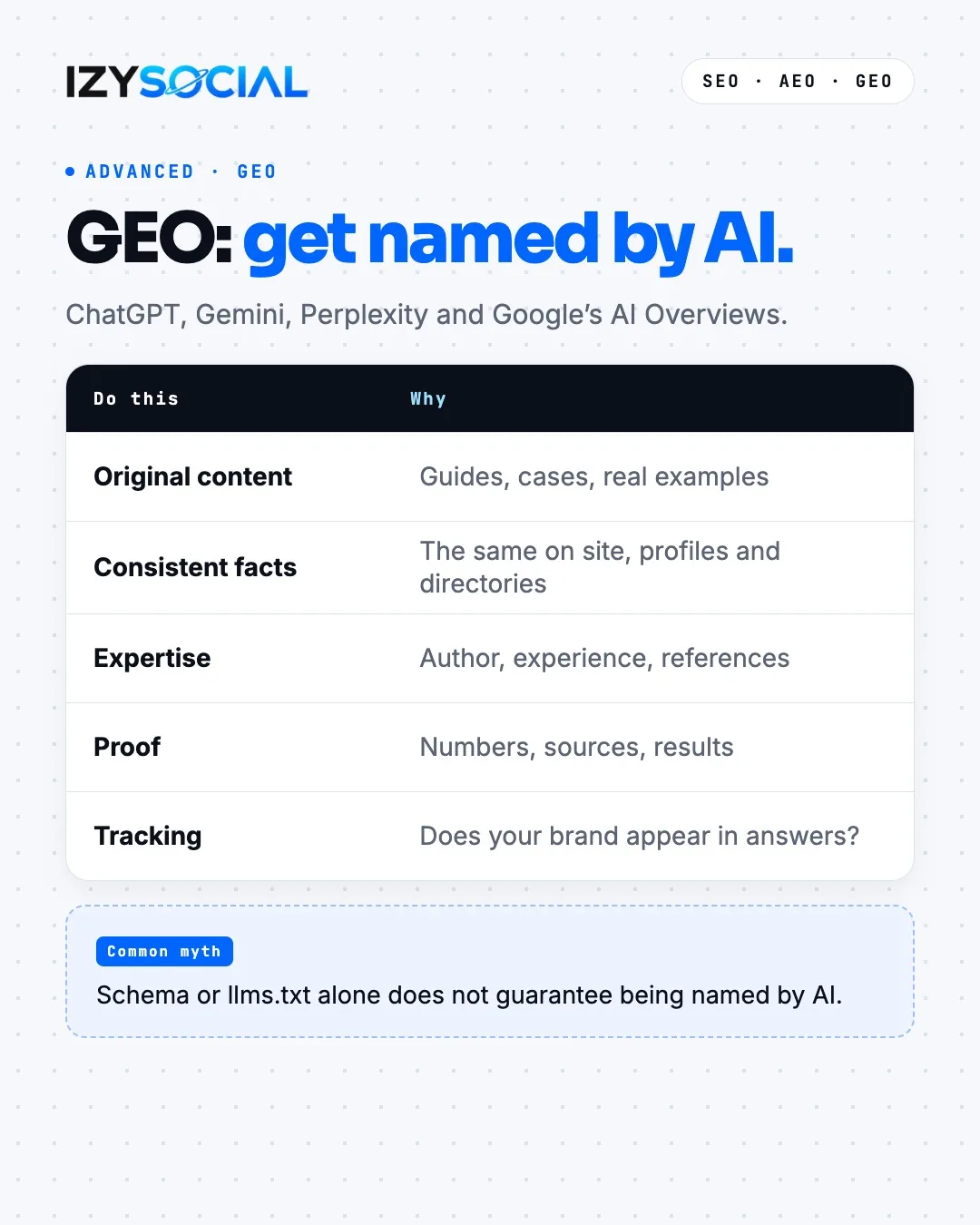
ChatGPT, Gemini, Perplexity and Google's AI Overviews favour sources they trust. That takes original content (guides, cases, real examples), consistent facts across your site and profiles, signs of expertise such as author and experience, and proof such as numbers and results. Check regularly whether your brand appears in these answers.
A common myth: schema markup or an llms.txt file alone does not guarantee being named by AI. Google states plainly that llms.txt has no effect on search visibility.
A 30-day SEO plan
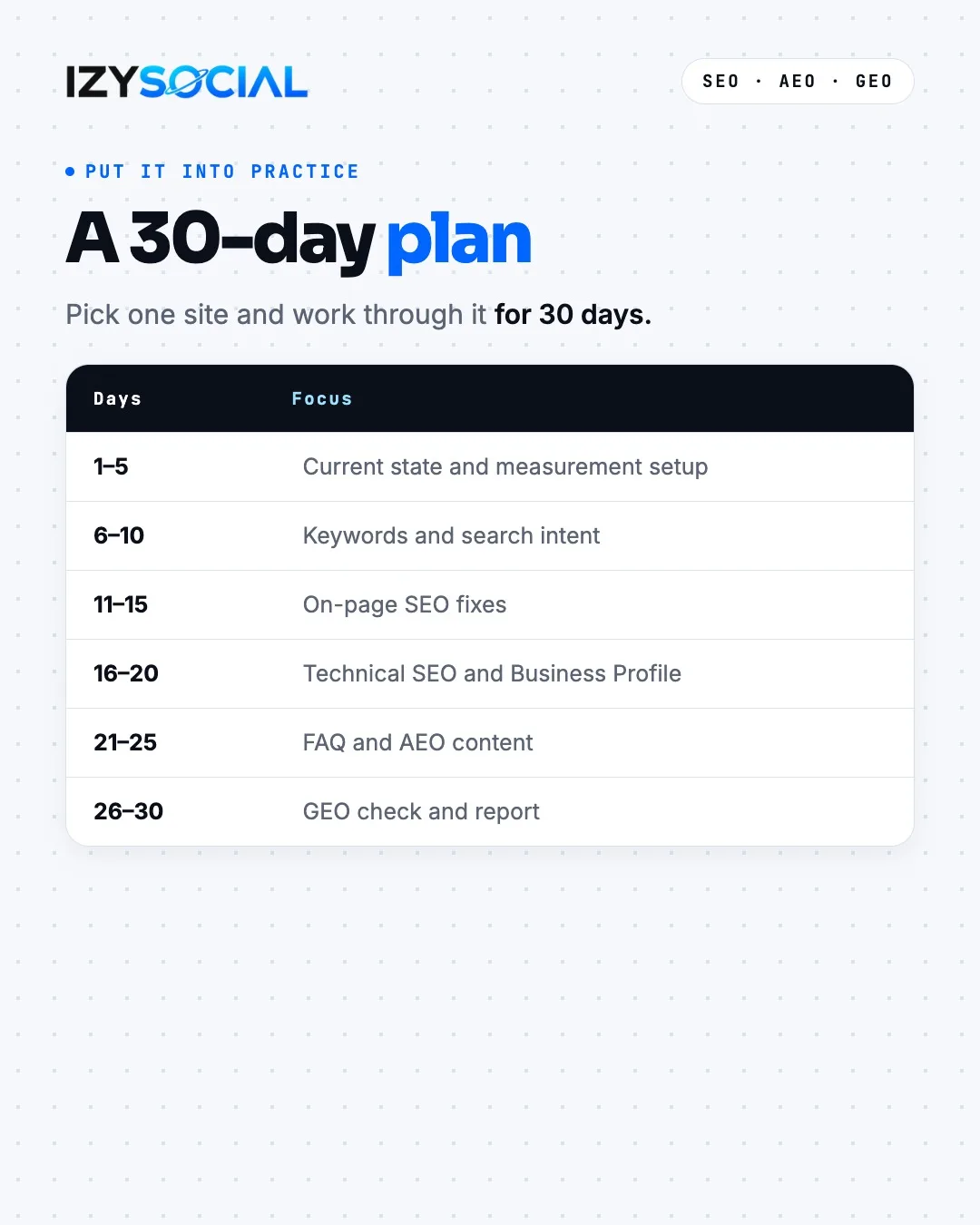
Pick one site and work in this order for 30 days. Days 1–5: map the current state and set up measurement (Search Console, Analytics). Days 6–10: set keywords and search intent. Days 11–15: make on-page SEO fixes. Days 16–20: sort out technical SEO and your Business Profile. Days 21–25: write FAQ and AEO content. Days 26–30: check AI answers and write a report.
Frequently asked questions
Are AEO and GEO replacing SEO?
No. Google's AI Overviews and AI Mode draw on the search index, and Google says optimising for AI is still SEO at its core. AEO and GEO add clear answers and reliable information on top of good SEO.
Do I need an llms.txt file?
Not for Google Search; Google says the file has no effect on rankings or visibility. There is also no strong evidence that other AI tools rely on it.
How long does SEO take to show results?
It depends on the change and the competition. Technical fixes and Business Profile updates can show an effect within weeks; ranking with content usually takes months.