

50 Ways to Market Online: Every Digital Marketing Channel in 6 Categories
Updated: October 29, 2026 · 2 min read
When people think of digital marketing, most picture Instagram and ads. Yet there are more than 50 channels that bring customers to a brand. This list sorts them into six categories with one line on each. You do not need all of them; the point is to see which ones fit your business.
AI and search (1–10)
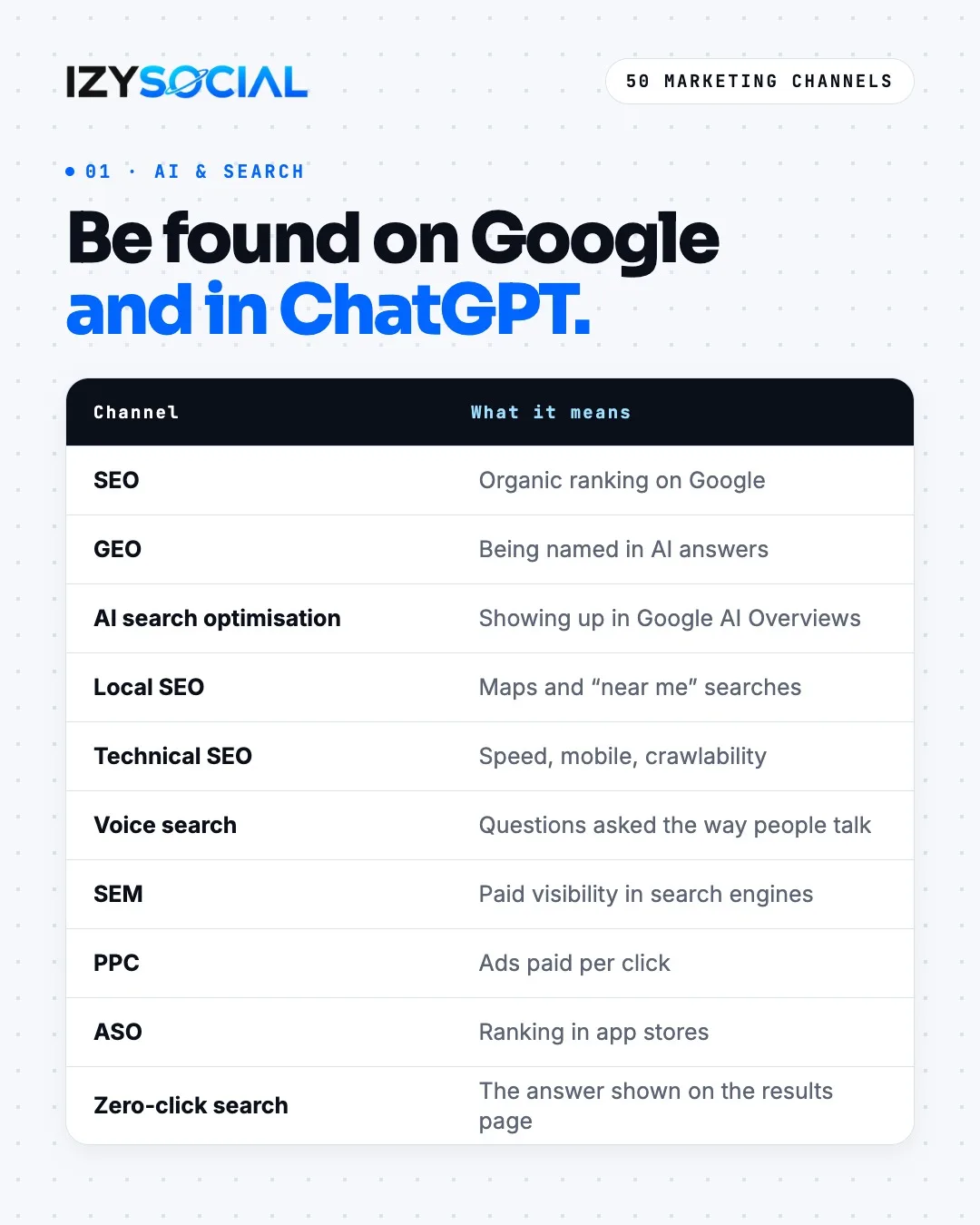
Customers should find you on Google and in AI tools like ChatGPT. On the organic side there is SEO, GEO, AI search optimisation, local SEO and technical SEO. On the search and ads side there is voice search, search engine marketing (SEM), pay-per-click (PPC), app store optimisation (ASO) and zero-click searches, where the answer appears right on the results page.
We cover this category in depth in our SEO, AEO and GEO guide.
Content marketing (11–20)
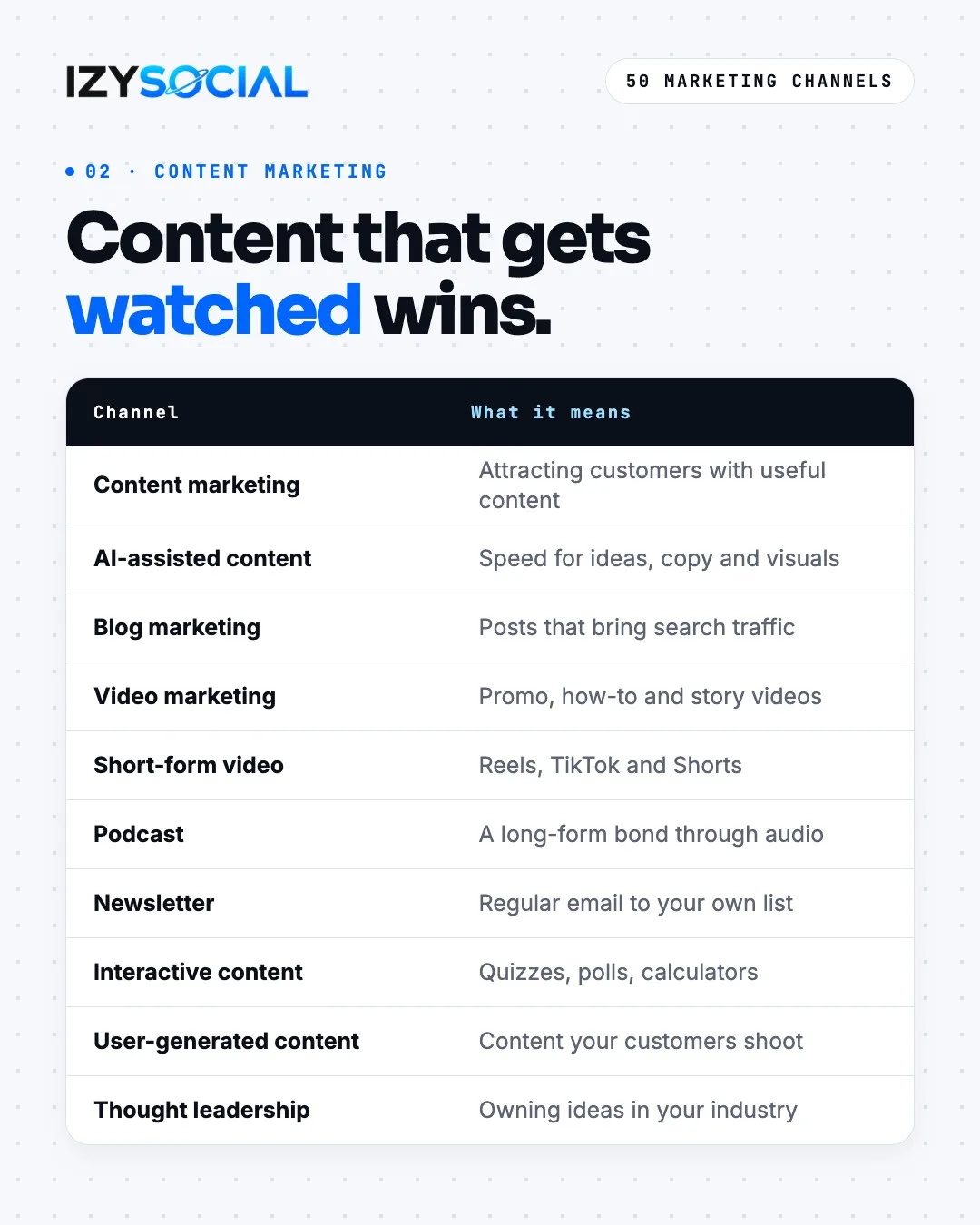
Getting people to watch content, not ads, is what pays. Content marketing, AI-assisted content, blogging, video marketing and short-form video such as Reels, TikTok and Shorts make up the production side. Podcasts, newsletters, interactive content like quizzes and calculators, user-generated content and thought leadership deepen the bond with your audience.
Social media (21–30)
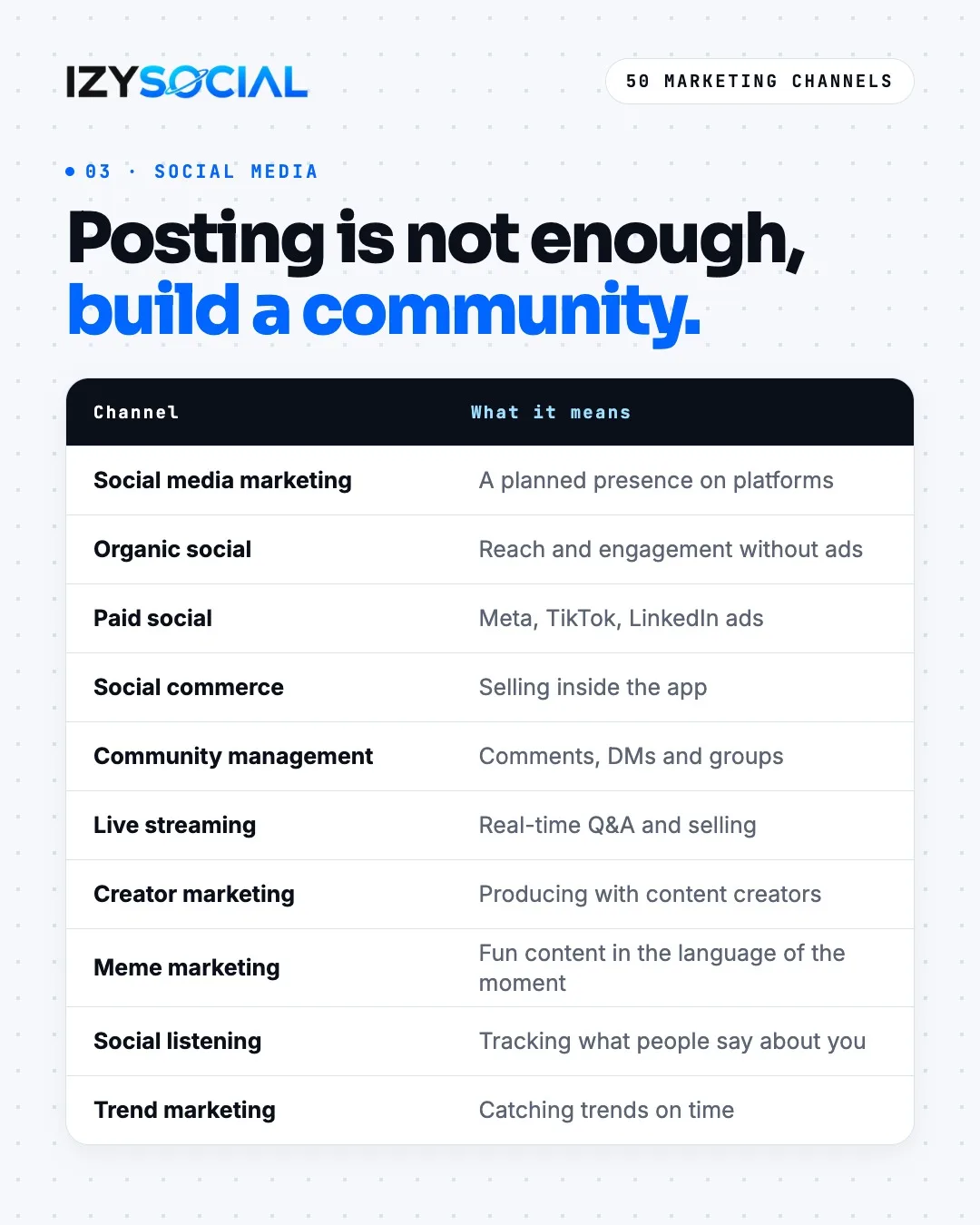
Posting is not enough; you need a community. Social media marketing, organic posting, paid social, social commerce and community management are the core. Live streaming, creator partnerships, meme marketing, social listening to track what people say about you, and trend marketing help you catch the moment.
Influencers and partnerships (31–36)
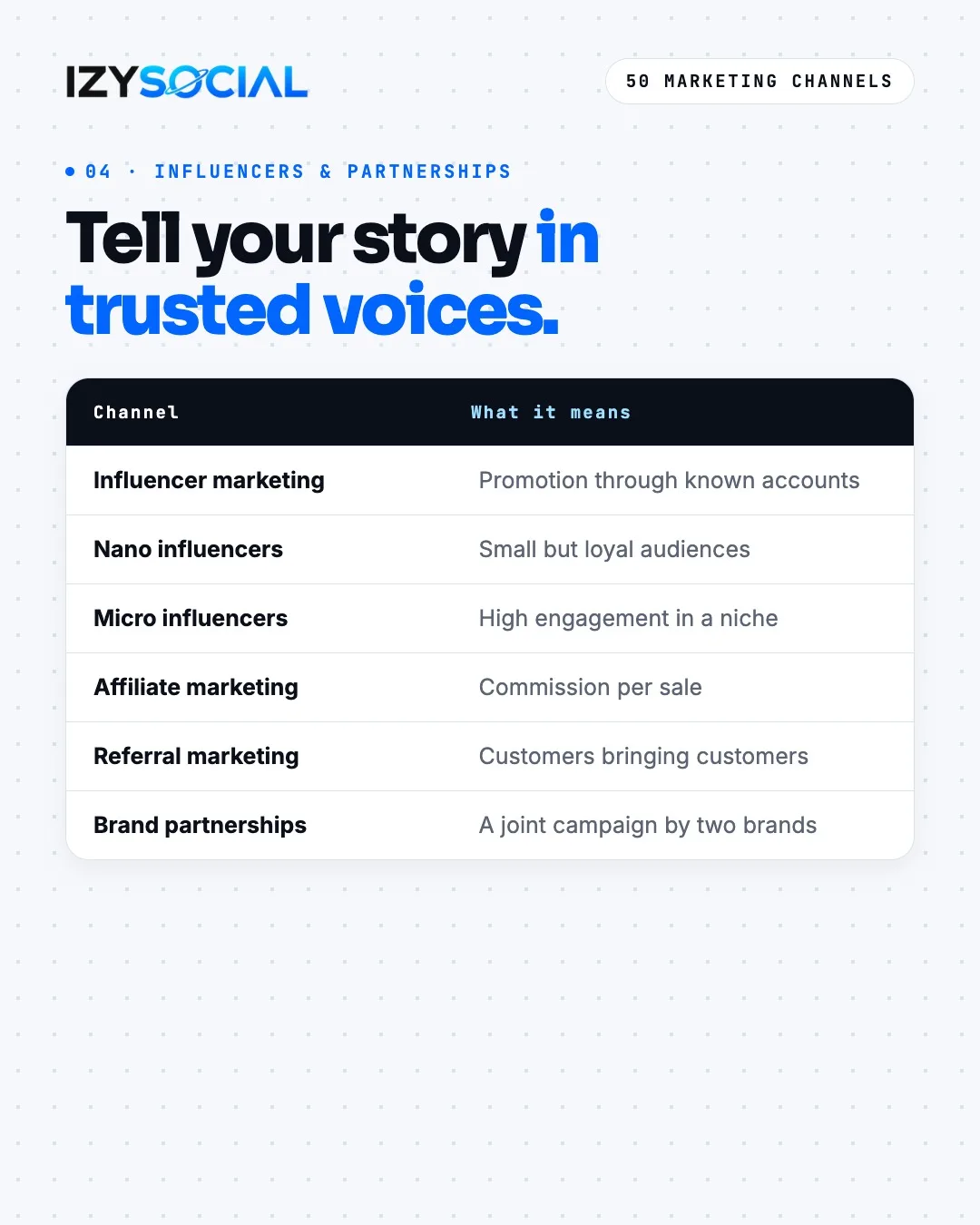
People believe recommendations from those they trust more than ads. In influencer marketing, nano influencers reach small but loyal audiences and micro influencers reach engaged niche ones. Affiliate marketing paid per sale, referral marketing where customers bring customers, and joint campaigns between brands belong here too.
Messaging and loyalty (37–43)
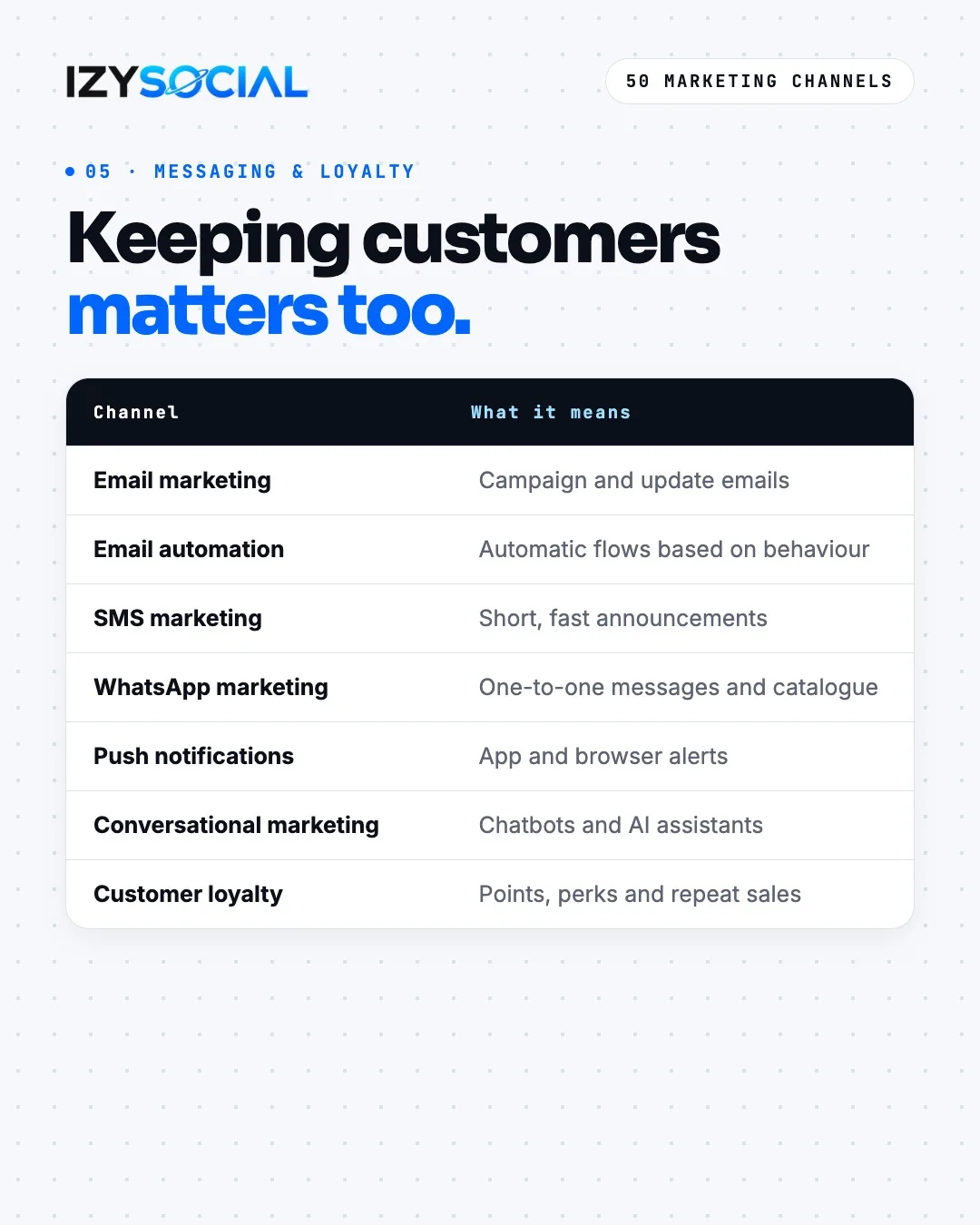
Keeping customers matters as much as finding new ones. Email marketing and behaviour-based email automation, SMS, one-to-one WhatsApp messaging, push notifications, conversational marketing with chatbots and AI assistants, and loyalty programmes with points and perks make up this category.
Ads and growth (44–50)
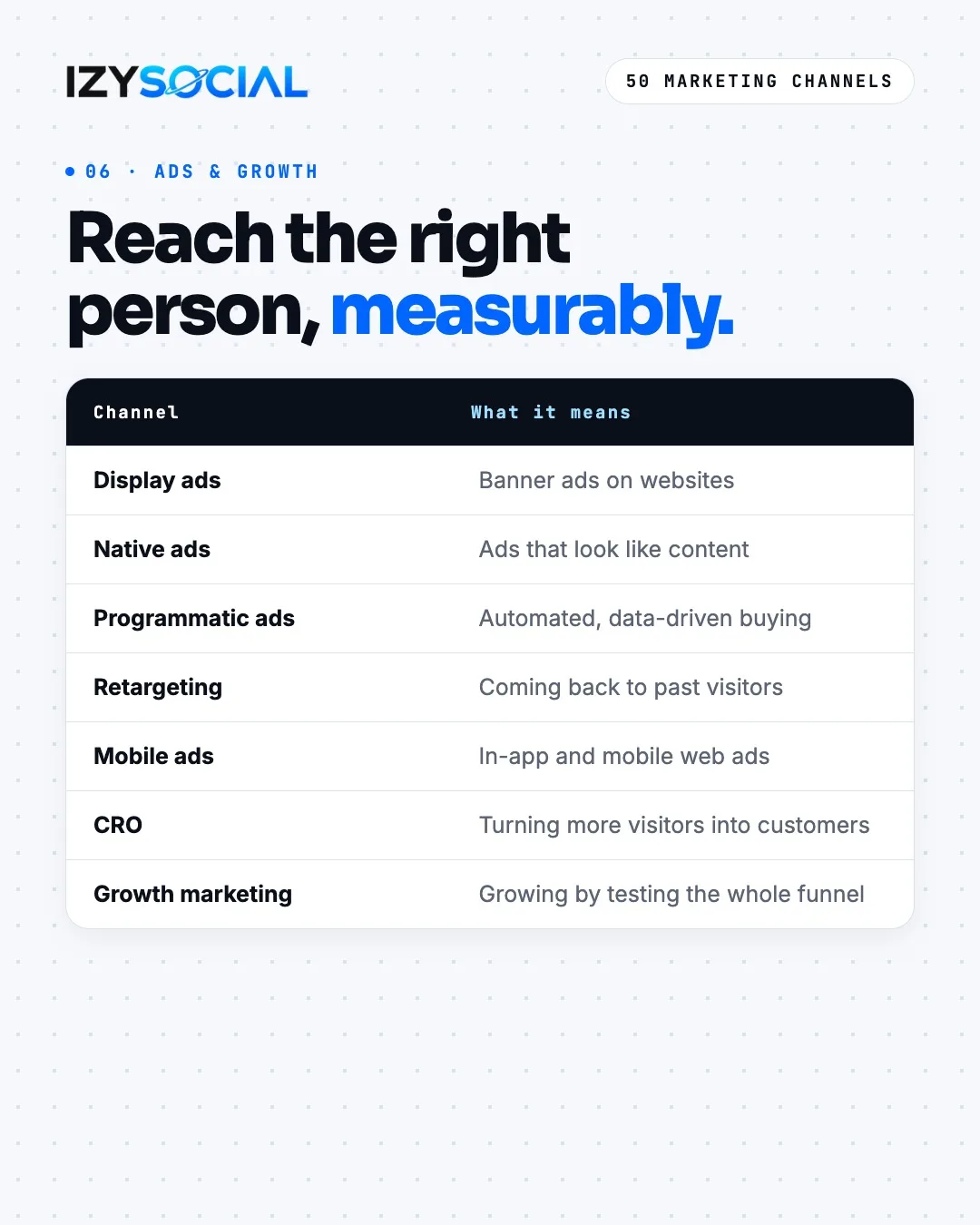
To reach the right person at the right time, measurably, there are display ads, native ads that look like content, programmatic ads bought automatically with data, retargeting that reaches past visitors, and mobile ads. Conversion rate optimisation (CRO), which turns more visitors into customers, and growth marketing, which tests the whole funnel, complete the list.
You do not need all 50. Where are your customers, what is your budget and what is your goal? Pick 3–4 channels based on those answers and get results there first.
Frequently asked questions
Which digital marketing channels should a small business start with?
For most small businesses, a Google Business Profile (local SEO), regular content on Instagram and a small Meta ad budget are a good start. Fast replies on WhatsApp also feed directly into sales.
Are SEM and PPC the same thing?
Close, but not the same. SEM is the umbrella term for paid visibility in search engines. PPC is the model where you pay per click; it is the most common model for search ads but is also used in social ads.
What is the difference between nano and micro influencers?
Exact thresholds vary by platform and source, but nano influencers usually have a few thousand followers and micro influencers tens of thousands. Smaller accounts often have higher engagement rates.